


Copper ore is hard, abrasive, and often clayey, so crushers run at full load year-round; one unplanned stop is a full shift of lost ore. Maintenance boils down to three jobs: watch wear parts, protect lubrication, keep fasteners tight. Below is a quick-answer table of core items, then daily, weekly, and monthly checklists you can copy into your round sheet, plus fault fixes, life-extension tips, and safety notes.
Here is a quick-answer table of the core maintenance items for a copper ore crusher:
| Maintenance item | Frequency | What to check | Purpose |
| Lubrication | Watch oil flow daily; sample weekly | Oil flow/level, gear-oil ferrography, grease points | Prevent bearing burn, cut wear |
| Wear parts | Visual daily; measure monthly | Liner/mantle thinnest point, chamber mouth | Predict change-out, hold grade |
| Hydraulic | Oil sample weekly; accumulator monthly | Pressure, seal leaks, N2 charge | Avoid stall, keep action |
| Drive | Belt daily; alignment weekly | Tension, odd noise, motor current | Prevent slip, prevent motor burn |
| Fasteners | Daily; torque monthly | Hold-down/bearing-housing/guard bolts | Prevent loosening, prevent crack |
Why Copper Ore Crusher Maintenance Matters
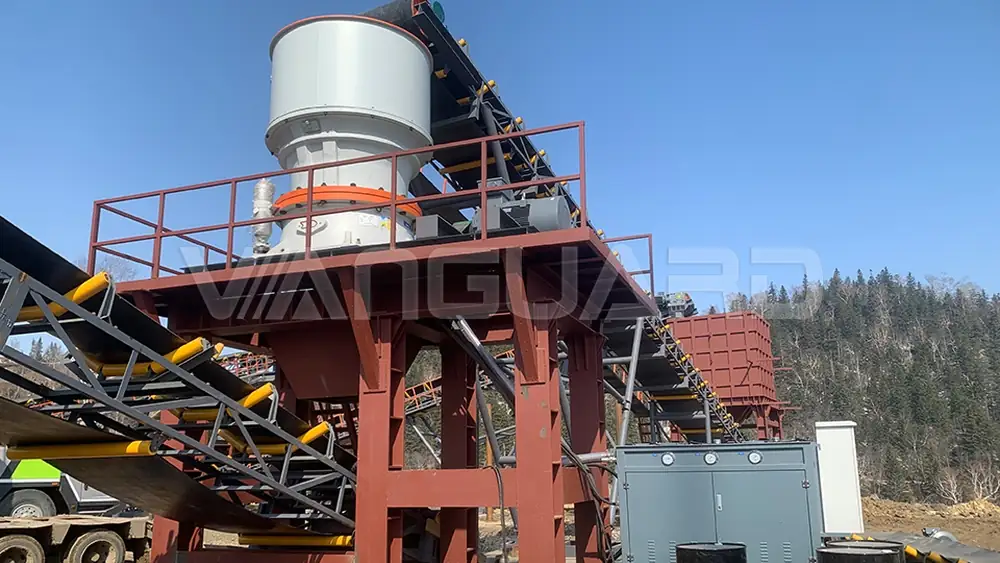
- Unplanned downtime is costly: at full copper load, one idle hour is one hour of ore lost; a single-shift stop means tonnes lost. - Strong abrasion: copper ore is hard and siliceous; liners and mantles wear far faster than on soft rock, so neglect suddenly drops output. - Safety risk: one loose bolt or one bearing seizure can hurt people or wreck the machine. - Total cost of ownership: good care lifts liner life and resale value, lowering cost per tonne.
Daily Maintenance Checklist
- Watch oil-flow station flow and tank level; no low-pressure alarm; grease points by run-hours. - Listen for dry metal-on-metal from starved oil; feel bearing-housing temperature; if hot, check oil at once.
- Eye the chamber-mouth liner/mantle, log the thinnest point; for metallic clash, first check tramp iron and loose liner. - On a jaw, watch the toggle; on an impact, the blow bars; schedule change at limit.
- Pressure gauge normal, no leaks, accumulator N2 in window; on multi-cylinder or hydraulic cone, watch lock pressure. - No drips at line joints or cylinder seals.
- Belt tension right, no slip scream, no burnt smell; motor current trend steady. - Coupling alignment not obviously off; no abnormal vibration at hold-down.
- Hold-down, bearing-housing, guard, and liner bolts not loose; tighten key points before and after each shift.- Recheck frame, feeder, and screen connection bolts.
Weekly and Monthly Maintenance
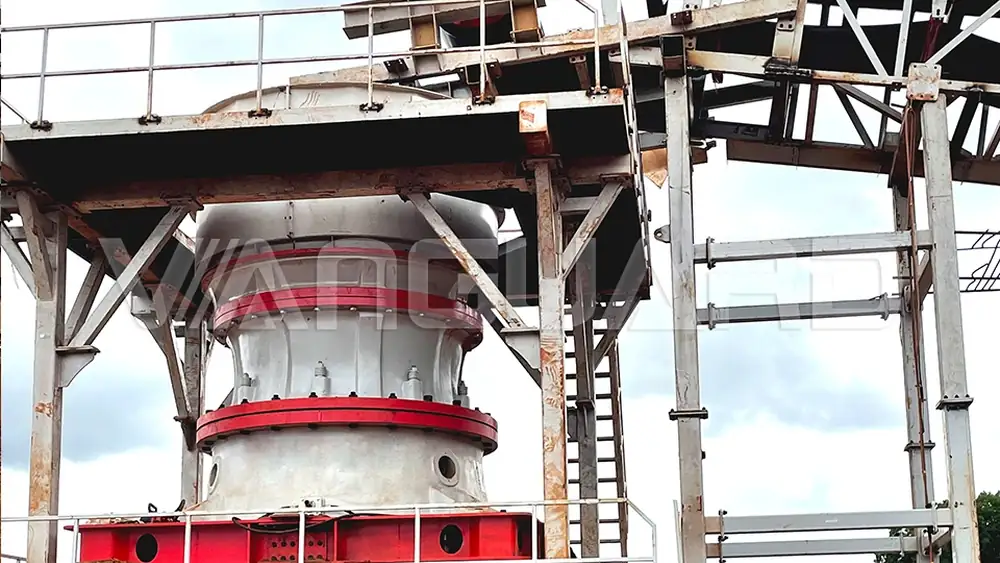
- Hydraulic oil sample: water, dirt, color; filter or change if off; swap filter on pressure alarm or schedule. - Feed evenness: no bridging, no segregation, feed centered; patch screen breaks and blinding fast. - Drive coupling alignment and housing level recheck; electrical motor-current trend and terminals not hot.
- Caliper liner wall, build a wear curve to predict change-out; re-torque fasteners to the maker's table. - Hydraulic accumulator N2 and seal-leak check; full lube check (gear-oil ferrography, grease stock). - Wear-part stock: toggle, belt, blow bars, screen cloth on hand; full alignment, foundation settlement, frame-level recheck.
Copper Ore Crusher Maintenance Schedule
| Task | Daily | Weekly | Monthly | Owner |
| Lubrication | Flow/level | Oil sample ferrography | Full check | Operator/lube |
| Wear parts | Visual chamber | — | Measure, curve | Maintenance |
| Hydraulic | Pressure/leak | Sample, filter | Accumulator/seal | Hydraulic tech |
| Drive | Belt/current | Alignment | — | Electrician |
| Fasteners | Pre/post shift | — | Torque re-tighten | Operator |
| Sampling | — | Oil sample | Ferrography | Lab |
| Alignment | — | Drive | Whole/foundation | Maintenance |
| Spare parts | Report gaps | — | Inventory | Storekeeper |
Common Maintenance Problems and Solutions
- Cause: wet clay feed, oversize feed, bridged chamber. - Fix: pre-screen clay, cap feed size, lower rate; clear chamber then restart.
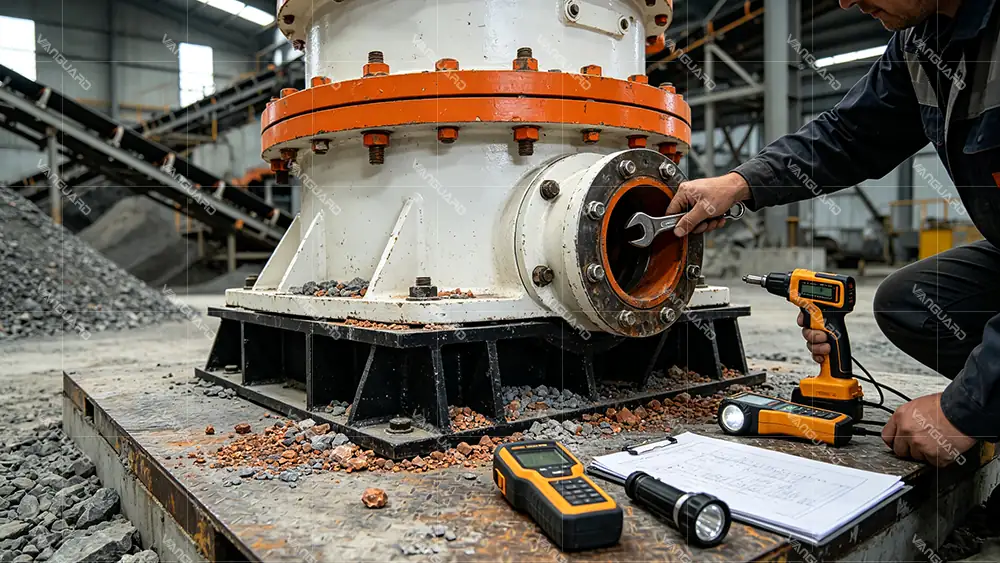
- Cause: low oil flow, clogged filter, heavy load. - Fix: check flow, swap filter, ease load; stop to cool if needed.
- Cause: tramp iron, loose liner, broken bolt. - Fix: stop, pull iron, tighten liner, swap bolt; add tramp removal at feed.
- Cause: CSS too wide, worn liner, slack belt, torn screen. - Fix: tighten CSS, change liner, tension belt, patch screen.
How to Extend Copper Ore Crusher Service Life
- Analyze ore first: test, then set chamber and liner material; pick alloy liners for high silica. - Closed circuit caps top size: screening backs up the crusher, cuts over-crush and recirc, wear stays even. - Online monitoring: sensors on vibration, temperature, oil quality warn before failure - far cheaper than breakdown repair. - Spare strategy: keep consumables on hand by consumption, plan long-lead parts; one stop costs more than the spare. - Operator training: drivers who read temperature, hear noise, and control feed stop small faults overnight. - On a crawler mobile plant, tracks self-move between sites and skip the foundation, but track and undercarriage parts still need hourly care.
Safety Precautions During Maintenance
- Lockout/tagout (LOTO): before any chamber entry or liner removal, cut energy, lock, tag. - Depressurize: relieve hydraulic pressure and bleed accumulator N2 before opening lines and cylinders. - Lifting: liners and mantles are heavy; use certified rigging and a lift plan, nobody under the load. - PPE: hard hat, goggles, steel-toe boots, dust mask; confined space and hot work by permit. - Rotating parts: confirm zero energy before removing guards, barring, or clearing the chamber to prevent accidental start.
Frequently Asked Questions
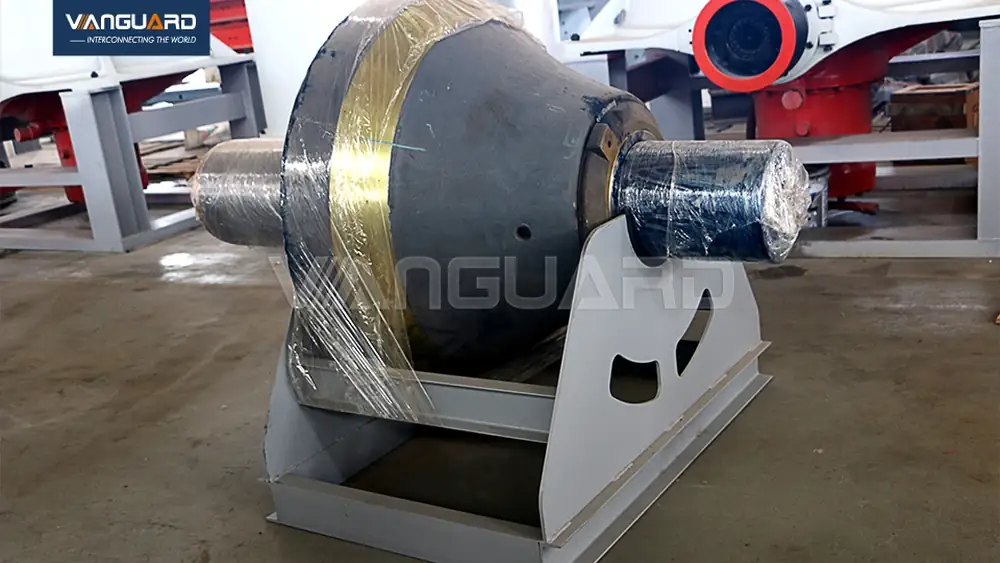
Liner wear, bearing temperature, oil flow and level, belt, fasteners, odd noise - these six are the floor.
Look at wet clay feed and oversize first, then current and chamber.
Check oil flow and filter; usually low flow or clogged filter, ease load if needed.
When the thinnest point hits limit or product coarsens out of grade - do not wait for a blowout.
Sensors on vibration, temperature, oil warn before failure - far cheaper than breakdown repair.
Need Help With Copper Ore Crusher Maintenance?
Copper ore is abrasive and downtime is expensive, so a maintenance plan matched to your ore and output pays off most. Vanguard Machinery can supply liner-material selection, a wear-part stock plan, and on-site inspection training to keep your unplanned stops minimal. Contact us: website www.vanguardtec.com, WhatsApp +86-xxx, email sales@vanguardtec.com.
Related Articles
• Hydraulic vs Spring Cone Crusher: What Sets Them Apart and How to Choose(2026-07-22)
• Why Is My Jaw Crusher Wearing Out Too Fast? Causes and Fixes(2026-07-09)
• Vanguard Machinery Showcases Mobile Crushing and Screening Plants at MINEENTRA 2026 Zimbabwe
• 200 t/h Limestone Crushing-and-Sand-Making Plant in Malaysia: Five-Size Mobile Line
• Why Mobile Crushing Plants Are Becoming Popular in Zimbabwe Mining Projects(2026-07-23)
• 300 TPH Mobile Crusher: Configuration, Capacity and Selection(2026-07-22)
• Crawler Mobile Crusher Price: What Drives the Cost of a Crawler Plant(2026-07-20)
• What Is an Impact Crusher? How It Works, Types and How to Choose(2026-07-17)

