


Quick Answer
Gypsum (CaSO4·2H2O) runs Mohs 1.5-2 - soft and heat-shy; push grinding past ~120°C and it dehydrates to hemihydrate, which gives false set downstream. For 325-2500 mesh high-quality gypsum powder, the HGM three-ring micro-powder mill is the right tool: ring-roller pulverizing is gentle on a soft rock, and the air circuit with the classifier keeps temperature below the dehydration line, yielding a fine, well-shaped powder instead of the flakes a ball mill tends to make. A single jaw (6CX/PE) takes run-of-mine lumps down to mill feed size.
Key Takeaways
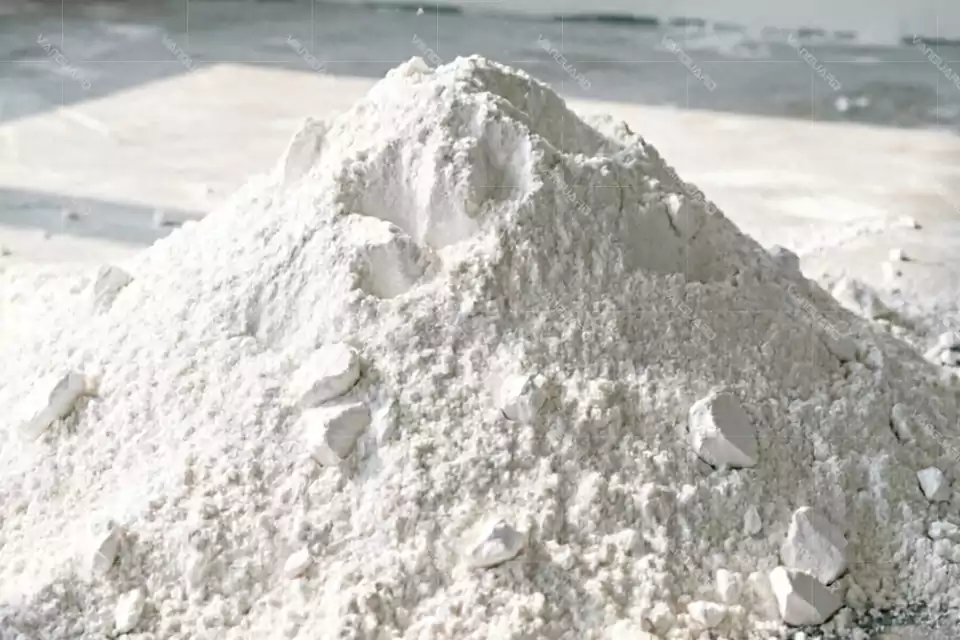
- ✔ Gypsum is not a hard rock - soft, heat-sensitive, easy to over-grind; wrong mill means hemihydrate or flaky powder - ✔ Quality gypsum powder lives at 325-2500 mesh: wall putty, paint extender, premium gypsum products - ✔ The HGM three-ring micro-powder mill suits gypsum best: low-pressure rollers, air-cooled temperature control, classifier cut - ✔ Choose by end use and fineness first, then daily tonnage; HGM covers the ultra-fine band, coarser gypsum has cheaper options - ✔ Temperature, iron, moisture decide pass/fail: air circuit for heat, wear parts for iron, don't over-wet the feed
What gypsum powder actually needs
Gypsum's value is in "fine" and "pure", but it is held back by "heat".
Plaster-grade gypsum runs about 100-200 mesh, but quality gypsum powder - interior wall putty, paint extender, gypsum product filler - goes 325 mesh up, even 1250-2500 mesh. The finer, the higher the value.
Dihydrate gypsum dehydrates to hemihydrate between 120-180°C. If grinding heat is not held down, hemihydrate sneaks into the powder and the downstream putty cracks and false-sets. Controlling temperature is not optional - it is the pass line.
Why the HGM three-ring micro-powder mill
Among the mills, HGM fits gypsum's two conflicts best: soft yet heat-shy.
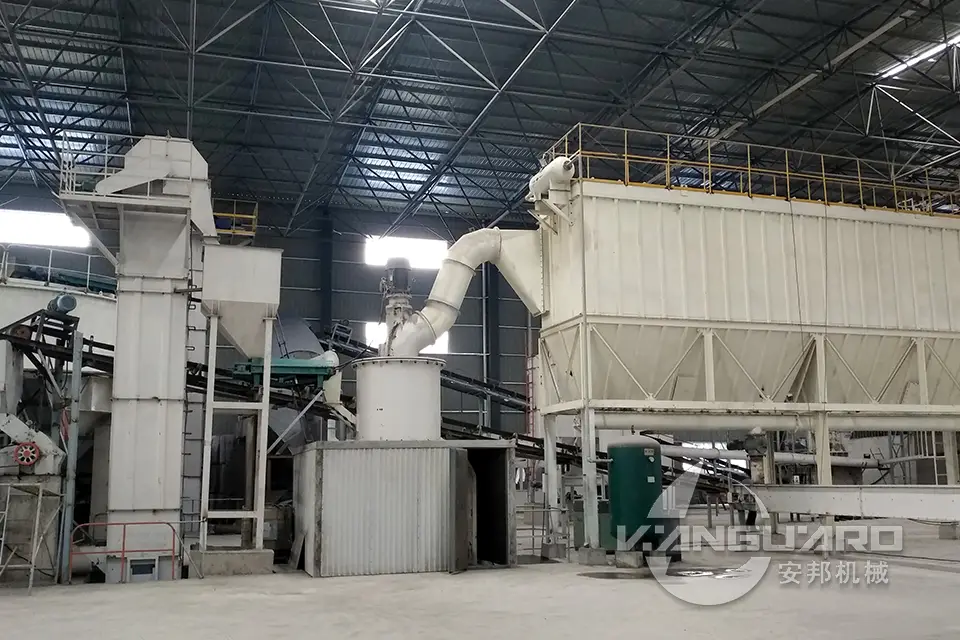
HGM pulverizes with multiple ring-roller layers - pressure spreads out, wear stays low. Gypsum is that soft, roller life is long, and it does not "smash" the material into an over-fine sludge.
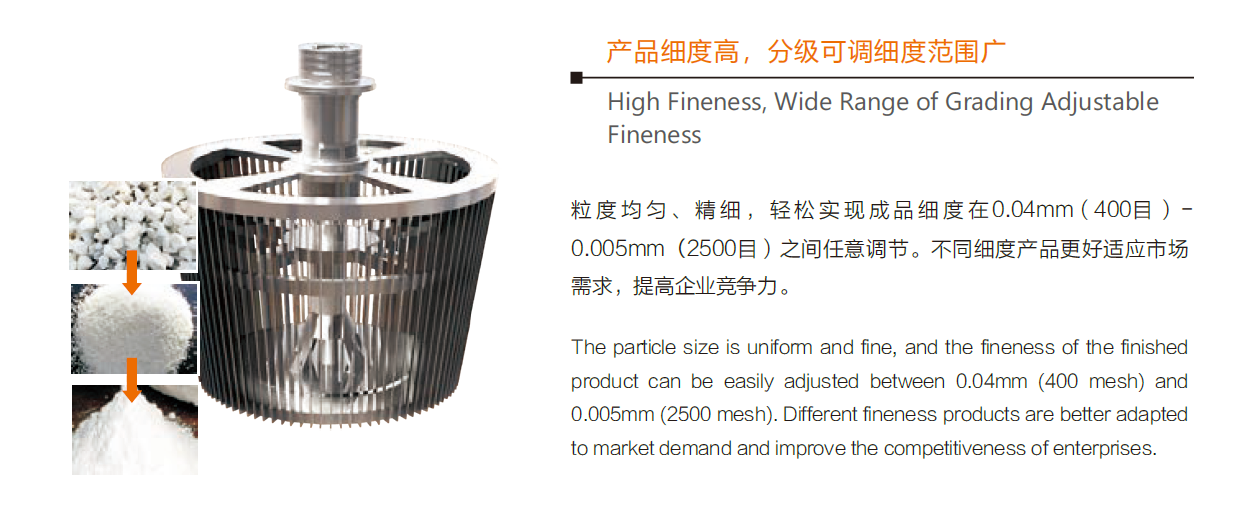
Grinding air carries heat out of the grinding chamber; the classifier in the loop pulls qualified fine powder out and returns the coarse. The whole system stays well below the dehydration line - low hemihydrate risk.
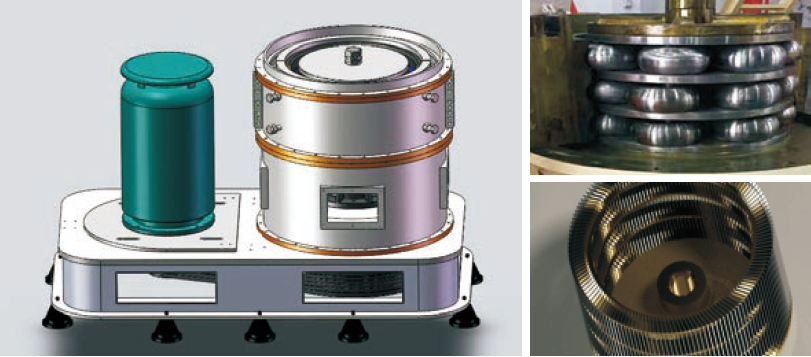
With a turbine classifier the cut point is tight and the size distribution narrow. The gypsum powder comes out near-spherical and free-flowing, better than the flakes from a ball mill - putty does not crack, paint does not settle.
| Target fineness | HGM fit | Typical outlet |
| 325 mesh | high capacity | gypsum board, cement retarder grade |
| 600-1250 mesh | mid capacity | wall putty, paint filler |
| 1250-2500 mesh | fine capacity | premium ultra-fine gypsum filler |
HGM versus other grinding methods
Send gypsum to a ball mill and three things show up: over-grind into flakes, high heat, iron from the balls. HGM avoids all three.
| Factor | HGM three-ring micro-powder mill | Ball mill |
| Fineness ceiling | down to 2500 mesh | limited, easy to over-grind |
| Particle shape | regular, free-flowing | flaky, tends to agglomerate |
| Grinding temperature | air-cooled, below dehydration line | tends to rise |
| Iron contamination | low (wear parts) | ball wear adds iron |
| Power use | low | high |
| Footprint | compact | large |
How to lay out the process
A gypsum line is short; the point is the mill must not overheat.
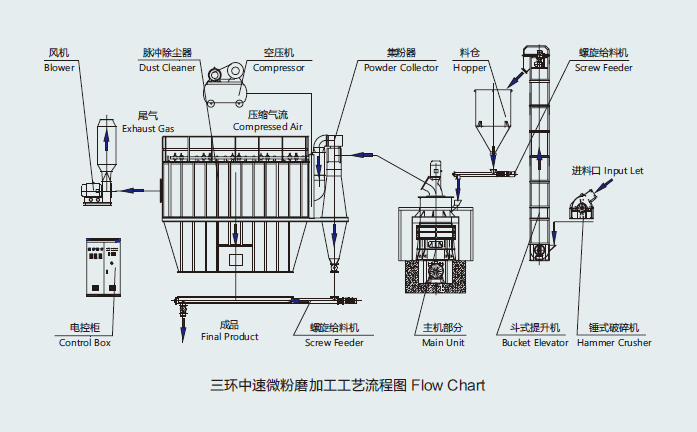
Run-of-mine gypsum (lumps) -> jaw (6CX/PE) coarse crush -> HGM three-ring micro-powder mill (with classifier) -> classifying -> qualified ultra-fine powder -> product silo.
Only gypsum lumps need the jaw; pre-crushed small stock or offcuts can feed HGM directly. Coarse crushing only fixes feed size - it does not decide powder quality.
| Step | Equipment | Role |
| Coarse crush (as needed) | jaw 6CX/PE | bring lumps to mill feed size |
| Grinding | HGM three-ring micro-powder mill | grind to 325-2500 mesh |
| Classification | turbine classifier | hold the fineness cut |
| Collection | cyclone + baghouse | product collection, air cools |
| Modification (optional) | surface modifier | anti-agglomeration for putty/paint grade |
Common traps: overheat, agglomeration, iron stain
Three things turn good gypsum into scrap.
Grinding heat not held down, dihydrate turns to hemihydrate - downstream false set and cracking. HGM's air circuit plus controlled air speed locks temperature below the dehydration line.
Ultra-fine gypsum carries static and clumps; looks fine but blocks. The classifier pulls qualified powder out in time; surface modification breaks clumps when needed.
Gypsum is whiteness-sensitive; steel wear adds iron, whiteness falls, buyer cuts price. HGM uses wear parts; magnetic separation backs it up when needed.
Field notes
Real problems from gypsum lines we have equipped.
Heat matters before fineness. One plant ran a ball mill for putty powder - fine, but hot, with hemihydrate mixed in; it cracked on the wall. Swapping to an HGM three-ring micro-powder mill with air cooling, same gypsum came out regular and crack-free, at lower power.
Don't bolt a hard-rock mill onto gypsum. Gypsum is that soft; low-pressure ring-rollers are enough, high pressure over-grinds it into sludge and wastes power. HGM's low-pressure rollers hit the mark.
Whiteness is gypsum's pricing power. Wear parts plus pre-mill magnetic separation hold iron down; stable whiteness means stable price.
Selection checklist and common mistakes
1. End use? -> putty/paint 325-2500 mesh; board grade can be coarser. 2. Daily tonnage? -> pick HGM capacity class; ultra-fine capacity falls as mesh rises. 3. Feed size? -> crush lumps with jaw (6CX/PE) to <20> high whiteness needs wear parts + magnetic separation. 5. Moisture? -> pre-dry free water, but stay below the dehydration line.
Mistake 1: ball mill for gypsum - over-grind, heat, iron triple hit. Mistake 2: chase fineness, ignore temperature - hemihydrate false set. Mistake 3: hard-rock mill on soft gypsum - over-grind into sludge.
FAQ
Plaster grade about 100-200 mesh; quality putty and paint filler starts at 325 mesh, premium up to 2500 mesh.
HGM's low-pressure rollers, air-cooled circuit and classifier cut give regular powder without over-grind, low temperature without hemihydrate, low iron. Ball mills over-grind, heat and pick up iron.
Yes - dihydrate dehydrates above 120°C to hemihydrate, causing false set. HGM's air circuit holds system temperature below the dehydration line.
325-2500 mesh with a turbine classifier holding the cut; capacity drops as mesh rises.
Lumps go through a jaw (6CX/PE) to mill feed size; small or offcut stock can feed HGM directly.
Whiteness-sensitive; iron drops whiteness and price. HGM wear parts plus pre-mill magnetic separation control iron.
Classifier pulls qualified powder out in time; surface modification breaks static clumps when needed.
YGM reaches 325 mesh for coarse filler; HGM goes to 2500 mesh, better for ultra-fine gypsum.
Pre-dry before grinding, but stay below the dehydration line - HGM's air circuit also carries off some moisture.
Compact, grinding-classifying-collection in one unit; saves floor space versus a ball mill.
By target mesh and model class; same mill at 325 mesh far out-produces 2500 mesh - test the material before fixing the design.
Jaw 6CX/PE coarse crush + HGM three-ring micro-powder mill with classifier, plus magnetic separation and modification as needed; contact Vanguard Machinery for free material analysis and selection.
Conclusion
Gypsum is not a hard rock - soft, heat-shy, easy to over-grind; wrong mill brings hemihydrate or flaky powder. For 325-2500 mesh quality gypsum powder, the HGM three-ring micro-powder mill is the right call: low-pressure rollers wear slowly, the air circuit holds temperature under the dehydration line, the classifier cuts a clean, regular powder. One jaw (6CX/PE) solves feed size; the rest is HGM. Need a tailored line? Contact Vanguard Machinery for free material analysis and selection.

