


Key Takeaways
Running a crusher reliably at -40°C is less about buying a more expensive machine and more about picking the right equipment type and doing the cold-weather modifications. Short version: for a permanent -40°C site, choose a stationary crushing line inside a heated building; for scattered or seasonal deposits, a crawler mobile plant with a cold package will cope; a tyre mobile plant is only advisable down to -20 to -30°C, not -40°C. Details below.
Why -40°C is hard
Standard quarry equipment is designed for -10 to -20°C. At -40°C, five things fail at once:
Plain Q235 steel loses impact toughness below -20°C and can crack at -40°C, especially welds and loaded members. Use low-temperature steel such as Q345D/E or Q460E, specified for Charpy impact >=27J at -40°C.
Standard AW hydraulic oil (ISO VG46) gets very viscous at -40°C; the pump starves, pressure will not build, and the motor overloads. Use low-temperature hydraulic oil with a pour point <=-50°C and add a tank heater.
Ordinary lithium grease hardens in the cold and bearings can seize. Switch to a -50°C grade low-temperature grease and add bearing-housing heat traces.
A standard rubber belt loses elasticity at -40°C and cracks on the first bend. Use a cold-resistant belt (natural + butadiene rubber, rated to -45°C).
At -40°C windings sweat and control cabinets frost over and short. Fit motor space heaters and keep the cabinet insulated, dehumidified and above 5°C.
Three equipment types, how they cope at -40°C
| Equipment type | -40°C rating | Key modification | Best fit |
| Stationary crushing line | ★★★★★ | Whole line in heated building | Permanent arctic sites (Siberia / Canada / Nordics) |
| Crawler mobile plant | ★★★★☆ | Cold package (LT steel + hydraulic heat + cabinet heat + cold belt) | Scattered deposits, seasonal, cold-region works |
| Tyre mobile plant | ★★★☆☆ | Modify hydraulics / lube / belt; tyres still weak | Temporary sites to -20 to -30°C, not first choice at -40°C |
Why stationary + heated building is safest
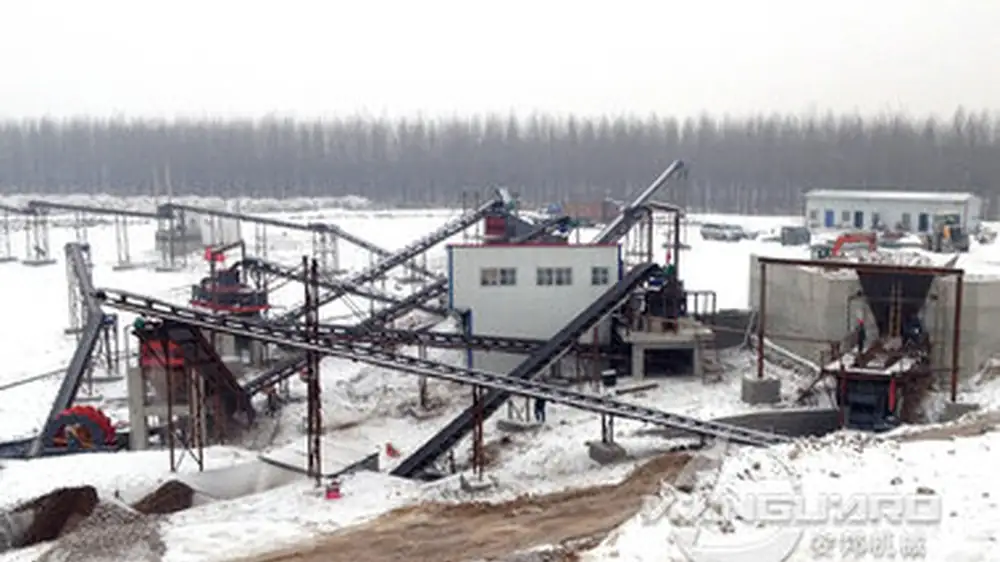
Put the whole stationary crushing line (vibrating feeder, jaw crusher, cone crusher, vibrating screen) inside a fully enclosed, heated steel building. People and machines both work at 5 to 15°C; only the feed and discharge openings face the weather. This is the standard setup for iron and copper mines inside the Arctic Circle, Siberia and northern Canada. Equipment inside is essentially specified for normal temperature, so retrofit cost and downtime stay lowest.
Cold package for crawler mobile plants
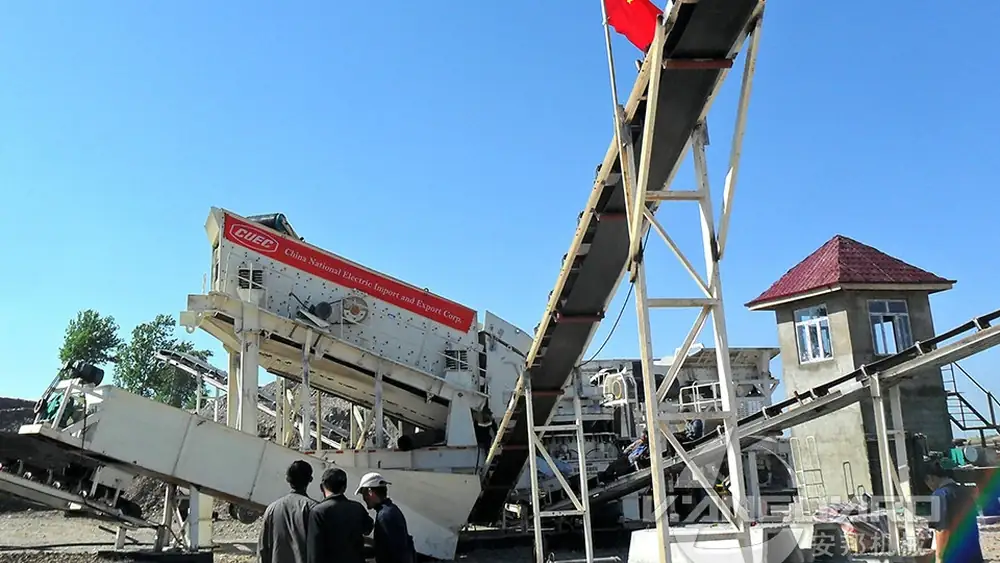
The Crawler Type Mobile Jaw Crushing Plant runs on a wide track footprint with a low centre of gravity, so it powers up on arrival and moves easily even on frozen ground. But a standard-temperature unit must get a cold package before -40°C: low-temperature steel plate, tank heater, hydraulic line heat trace, insulated cabinet, cold-resistant belt, low-temperature grease. With that done it handles cold-region road building, mining and overburden. The Crawler Type Mobile Impact Crushing Plant is the same story.
-40°C cold-weather retrofit checklist
| System | What to change | Goal |
| Structure | Q345D/E or Q460E low-temp steel | Charpy >=27J at -40°C, no cracking |
| Hydraulics | LT oil (pour point <=-50°C) + tank heater + trace | Cold start OK |
| Lubrication | -50°C grease + bearing heat trace | Bearings do not seize |
| Electrical | Motor space heater + insulated, dry cabinet (>5°C) | No condensation, no short |
| Conveying | Cold-resistant belt (-45°C) | No cracking |
| Feeding | Hopper / liner heater or anti-freeze design | Wet sticky feed will not freeze and block |
Three Questions to Pick the Right One
Ask yourself three questions:
Yes -> go straight to a stationary crushing line in a heated building, safest option. No (only winter dips to -40°C, e.g. cold-region construction) -> read on.
Yes -> crawler mobile plant + cold package. Fixed site but you do not want a big building -> stationary line + simple insulated shelter.
Year-round -> do not hesitate: stationary + fully enclosed building. Short / seasonal -> crawler mobile plant + cold package is more flexible.
Bottom line: permanent arctic favours stationary, mobile arctic favours crawler with a cold package, and a tyre plant is not the first choice at -40°C.
Common selection mistakes
- Dragging a standard-temperature machine to -40°C with no retrofit -> will not start in the morning, cracks on first shock. - Changing only the hydraulic oil but forgetting grease and belt -> bearings seize, belt snaps. - Leaving a crawler plant outdoors with no insulation -> cabinet condensation and short circuit. - Using plain Q235 for structural parts -> weld cracking in the cold. - Ignoring feed anti-freeze -> wet sticky material freezes in the hopper and blocks it.
Lessons from the field
In the Arctic Circle, Siberia and northern Canada, projects are almost always stationary plus a fully enclosed heated building, because people, machines and material all need warmth. Crawler mobile plants show up more on scattered deposits or cold-region works like roads, pipelines and hydro, and with a proper cold package they run a full winter without drama. The real bottleneck is rarely the main frame; it is the four cold-shy subsystems - hydraulics, lubrication, electrical and conveying - so do not skip any of them during retrofit.
FAQ
Mostly the hydraulic oil thickens, the pump starves and pressure will not build; the cold motor also trips easily. Heat the hydraulic tank and lube points first, then jog it.
For a permanent arctic site, stationary in a heated building is safest - people and machines stay warm. Mobile fits scattered or seasonal work.
Yes, but only with a cold package: low-temp steel, tank heater, insulated cabinet, cold belt, low-temp grease. With that it runs year-round in the cold.
Low-temp structural steel, low-temp hydraulic oil plus heating, low-temp grease plus heating, electrical heating and dehumidification, cold belt, and feed anti-freeze - cover all six.
Use low-temperature anti-wear oil with pour point <=-50°C, plus a tank heater and line heat trace if needed, to keep cold starts smooth.
A standard rubber belt will. Fit a cold-resistant belt (natural + butadiene rubber, rated -45°C) or it cracks on the first bend.
Yes. Fit motor space heaters and keep the cabinet insulated, dehumidified and above 5°C to stop condensation shorts.
No. Ordinary lithium grease hardens in the cold and can seize bearings; use a -50°C grade low-temperature grease.
At -20 to -30°C on a temporary site, yes; at -40°C it is not recommended - tyre rubber hardens and is prone to bulging and cracking, and it is less stable than tracks on snow and ice.
Yes. Wet sticky feed freezes solid at -40°C and blocks the hopper, so the hopper and liners need heating or anti-freeze design.
Essentially stationary crushing line plus a fully enclosed heated building, the whole line indoors with only the feed and discharge openings exposed.
Yes. Both stationary and crawler models can be fitted with a cold package, tailored to your site temperature and tonnage. For selection advice, contact Vanguard Machinery for a free material analysis.
Conclusion
-40°C is not off-limits for crushers; the key is the right type plus the right retrofit. Permanent arctic goes stationary with a heated building; mobile needs go crawler with a cold package. Get the four cold-shy subsystems - hydraulics, lubrication, electrical, conveying - properly modified and the whole plant will ride through the hardest winter.
Need a crushing solution tailored to your arctic site? Vanguard Machinery supplies both stationary and crawler cold-climate configurations and supports free material analysis. Contact us for targeted selection advice.
Related Articles
• Hydraulic vs Spring Cone Crusher: What Sets Them Apart and How to Choose(2026-07-22)
• Why Is My Jaw Crusher Wearing Out Too Fast? Causes and Fixes(2026-07-09)
• 300 TPH Mobile Crusher: Configuration, Capacity and Selection(2026-07-22)
• Crawler Mobile Crusher Price: What Drives the Cost of a Crawler Plant(2026-07-20)
• What Is an Impact Crusher? How It Works, Types and How to Choose(2026-07-17)
• Why Choose a Crawler Mobile Crusher?(2026-07-15)
• What Is a Crawler Type Mobile Plant? How It Works and How to Choose(2026-07-20)
• Vanguard Machinery Showcases Mobile Crushing and Screening Plants at MINEENTRA 2026 Zimbabwe

