


Key Takeaways
Saudi infrastructure (Vision 2030 driving roads, rail and new cities) needs large volumes of construction aggregate, and local limestone is abundant, Mohs 3–4 and low-abrasion — exactly the "low-to-medium hardness plus shape-critical" window an impact crusher owns. Vanguard Machinery (a Chinese-made crushing equipment brand) builds the PFV Series Impact Crusher, and the PFV1315 is the workhorse at 180–350 t/h. Selection is not about the cheapest tag; it is about matching feed, tonnage and shape. Below, a three-question method sets the direction.
Can the PFV1315 Hold Your Duty?
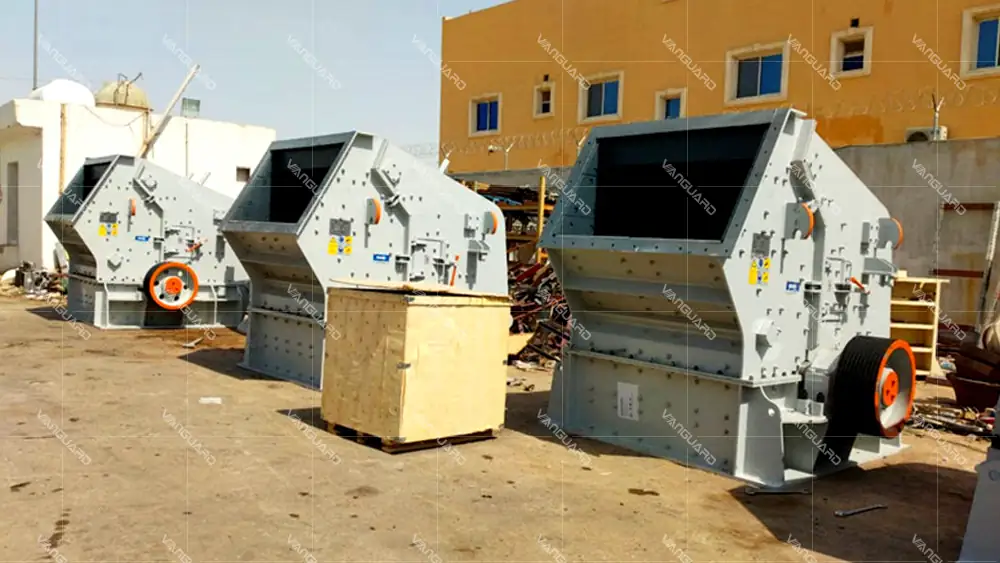
| Parameter | PFV1315 typical |
| Rotor size | 1320×1500 mm |
| Max feed | ≤350 mm |
| Capacity | 180–350 t/h |
| Motor power | ~220 kW |
| Discharge gap | Adjustable 20–60 mm (fine mode to 0–80 mm) |
| Weight | ~26 t |
Limestone fit: Mohs 3–4, low abrasion → long blow-bar life and a clean cubic product — the most comfortable feed an impactor gets.
Three Questions to Pick the Right One
- Q1 Material: is it low-to-medium hardness and low abrasion? Limestone, dolomite, gypsum → impact fits; granite or basalt (high abrasion) → run a cone crusher instead. - Q2 Shape: do you need a cubic product with low flakiness? Impact crushers lead on shape; if you only make road base, a jaw in open circuit may do. - Q3 Window: does your feed ≤350 mm and target 180–350 t/h match the PFV1315? Oversize or undersize → step up or down a model.
Typical Configuration for Saudi Limestone
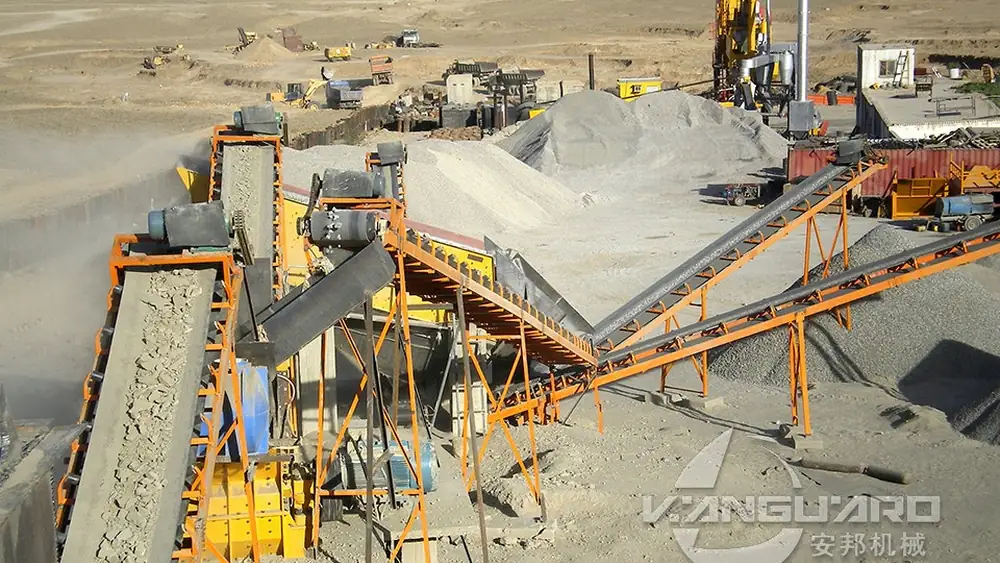
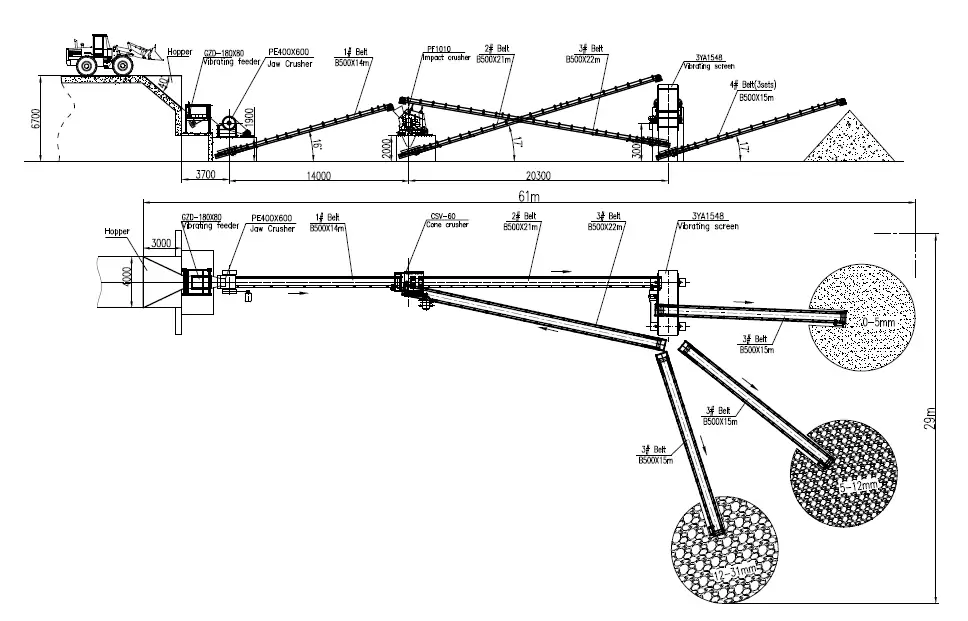
- Fixed line: ZSW feeder + 6CX/PE jaw (primary) + PFV1315 (secondary) + YA screen + recirculation. - Mobile option: wheel or crawler impact plant for remote quarries or multi-site work. - Arid-hot climate notes: dry or bag-filter dust suppression, or mist cannon; bearing cooling; sealed enclosures against sand so dust stays out of the oil.
Operation and Routine Care
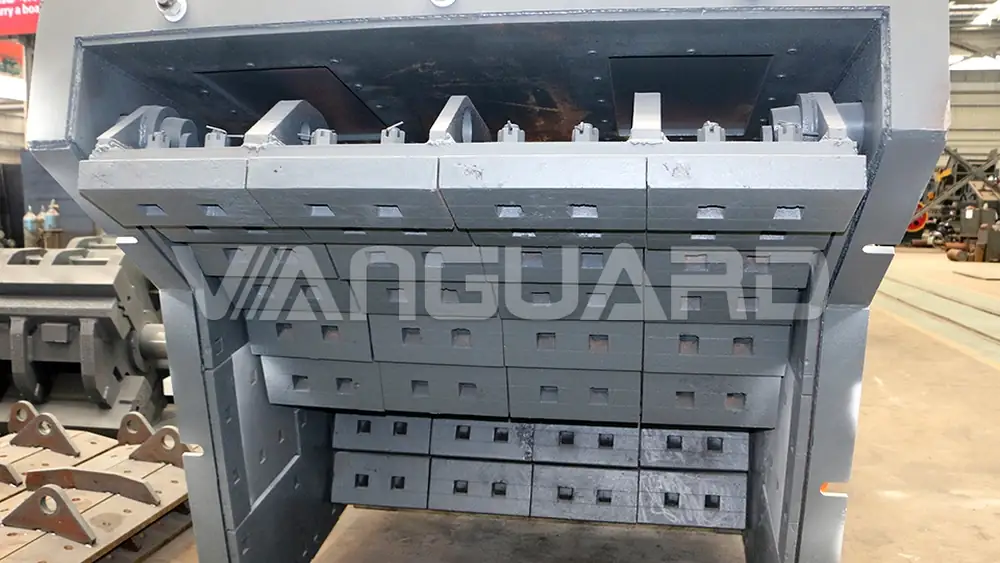
- Blow bars: inspect every 800–1500 h in limestone; rotate or replace on single-side wear; keep the rotor dynamically balanced. - Discharge gap: adjust to target size; a smaller gap cuts tonnage and refines shape, so re-check capacity. - Lubrication: rotor bearings on grease or recirculating oil; temperature ≤70°C (alarm 80°C); re-grease on schedule by duty. - Dust: in arid sites, seal bearing housings and run central dust control to keep sand out of the lubricant.
Common Selection Mistakes
- Running high-abrasion hard rock (granite) through an impactor → blow-bar cost explodes → switch to a cone. - Feeding above 350 mm → chamber jam and bar breakage → pre-crush with a jaw first. - Comparing only purchase price, not cost per ton (bars plus power); the three-year math flips the result. - Ignoring shape specs, then the ready-mix plant rejects flaky aggregate.
Field Note
A Gulf-region limestone aggregate line ran an open-circuit jaw whose product was too flaky for the ready-mix plant. Adding a PFV1315 in closed circuit fixed the shape, held 250 t/h steady, and blow bars lasted 1200 h-plus on limestone. The point: an impactor is the cost-effective answer for "shape plus low abrasion," not a crusher you throw at every rock.
Recap of the Three Questions
Revisit the three: material sets the type, shape makes the case for impact, window decides the PFV1315. Send us your material, feed size, target tonnage and shape requirement and Vanguard Machinery will run a free material analysis and plant proposal.
FAQ
180–350 t/h, set by feed size, product size and material; limestone sits toward the top.
800–1500 h in limestone; on abrasive rock they drop fast, so monitor wear and replace on schedule.
≤350 mm; above that, pre-crush with a jaw into the window.
Low-hardness, low-abrasion and shape-critical → impact; high-hardness, high-abrasion → cone.
Discharge gap adjustable 20–60 mm (fine to 0–80 mm); a screen in closed circuit stabilizes fines.
Bearing cooling plus central dust control plus sand-proof seals — all three together.
About 220 kW, with margin for configuration and feed swings.
High cubicity and low flakiness make it ready-mix friendly, lifting both price and outlet.
Jaw + PFV1315 + screen in closed circuit — the common limestone secondary/tertiary setup.
Chinese-made keeps cost low and the chain short; blow bars and wear parts typically arrive in weeks, not the months an import can take.
Related Articles
• 200 t/h Limestone Crushing-and-Sand-Making Plant in Malaysia: Five-Size Mobile Line
• 300 TPH Mobile Crusher: Configuration, Capacity and Selection(2026-07-22)
• What Is an Impact Crusher? How It Works, Types and How to Choose(2026-07-17)
• Hydraulic vs Spring Cone Crusher: What Sets Them Apart and How to Choose(2026-07-22)
• Why Is My Jaw Crusher Wearing Out Too Fast? Causes and Fixes(2026-07-09)
• Vanguard Machinery Showcases Mobile Crushing and Screening Plants at MINEENTRA 2026 Zimbabwe
• Why Mobile Crushing Plants Are Becoming Popular in Zimbabwe Mining Projects(2026-07-23)
• Crawler Mobile Crusher Price: What Drives the Cost of a Crawler Plant(2026-07-20)
- Prev: How to Maintain a Crawler Type Mobile Jaw Crushing Plant
- Next:None

