


Key Takeaways: Choosing a mobile crushing plant manufacturer is really choosing a partner that backs your output long term, can be audited, and can bail you out in an emergency. This guide gives a buyer a four-step qualification check, the Three Questions method, after-sales and spare-parts evaluation, customization versus standard, total-cost-of-ownership traps, and red flags, so you can see the risks clearly before signing.
What a Mobile Crushing Plant Manufacturer Actually Does
Many buyers picture a manufacturer as a workshop that welds a frame and bolts on a motor. That view is far too narrow. Delivering a mobile crushing plant crosses at least five gates. First is process design: from your feed hardness, clay content, target shape and capacity, the supplier sets the number of crushing stages, screening loops and closed circuits. Second is structural fabrication: frame, crushing chamber, feeder, screen, belts and power pack. Third is electrical and system integration, tying crushing, screening, dust control, lubrication and safety into a line you start and stop with one command. Fourth is quality control and factory acceptance. Fifth is post-delivery installation guidance, spare parts and emergency response. So a real manufacturer sells not a single machine but a capacity package that is commissionable, auditable and backed. When you compare quotes, you should not only weigh equipment weight and motor power. You should weigh whether the package delivers spec-compliant material steadily at your site.
Configuration and Chassis: Read the Proposal First
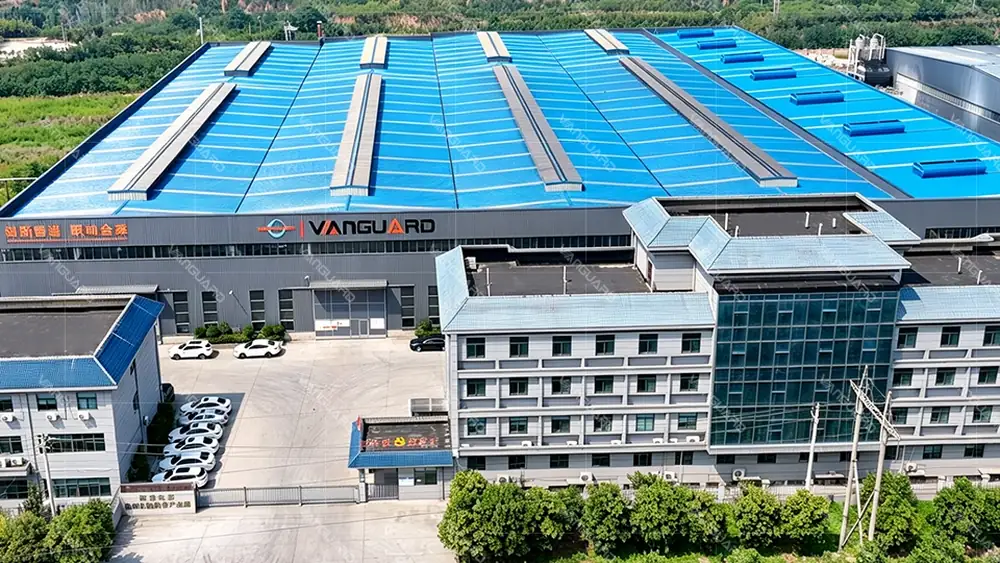
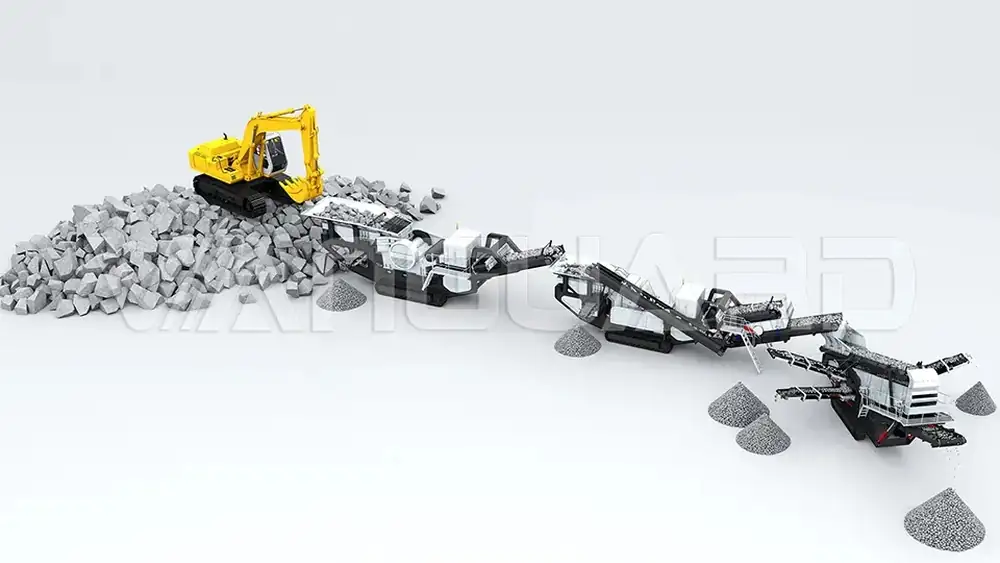
Before you compare prices, understand what chassis and process the proposal gives you. Mobile crushing plants commonly use three chassis ideas. Crawler models run on wide tracks with a low center of gravity and power up on arrival, needing no extra supports, which suits rough, muddy, frequently relocated quarries. Tyre units move fast on roads at low relocation cost, fit short-distance multi-site work, but need a leveled, hardened pad on site. Modular semi-mobile blocks, such as the MBP series, bolt together with light foundations and relocate as a whole, balancing capacity and flexibility. What a buyer must watch: does the proposal match stages to your material? Does it include closed-circuit screening to hold gradation? For crawler units, does it state the wide-track low-center-of-gravity stabilization? Write these into the technical agreement so there is no argument later.
Qualification Verification: A Four-Step Method
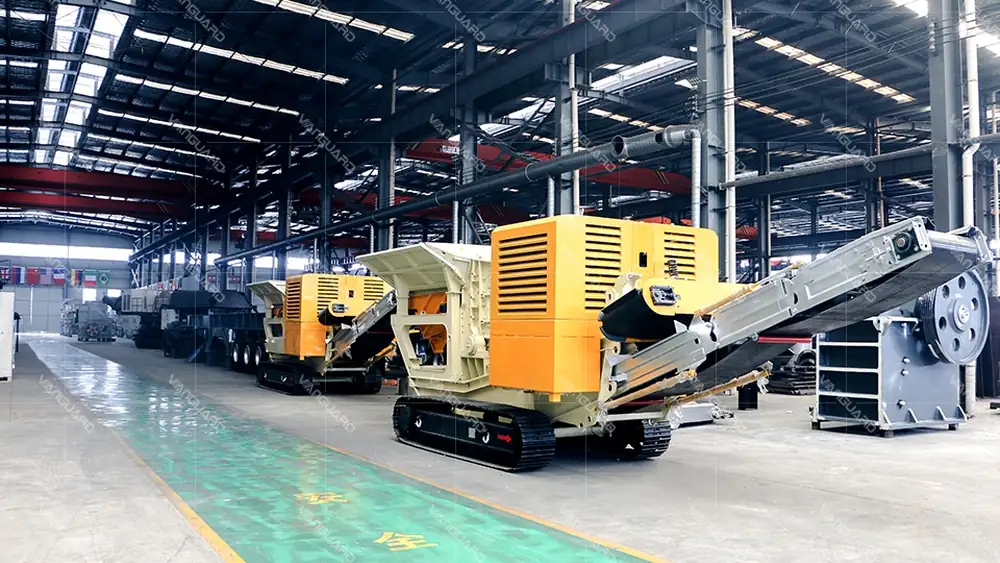
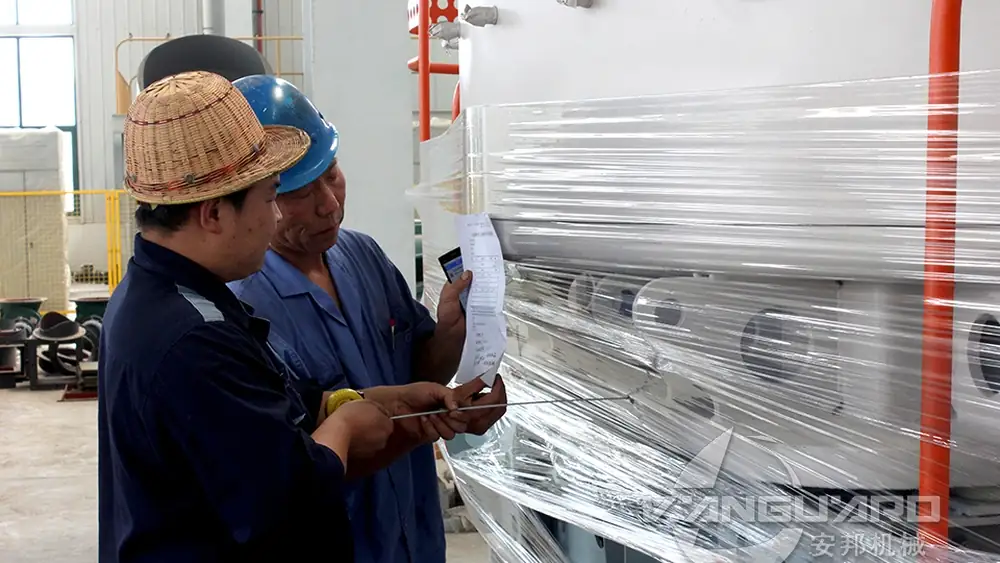
Before signing, run these four steps to know your supplier. 1. Certifications and documents: ISO 9001 is the baseline; for export markets check CE, EAC and local mining-safety marks. Ask for original certificates or officially verifiable numbers, and watch the validity and scope. 2. Factory audit: go yourself or hire a third party. Focus on welding, machining, assembly line and quality checkpoints, not just the showroom prototype. A supplier that opens its workshop to show work in progress is already showing confidence. 3. References and field proof: ask for recent cases at the same material and capacity tier, ideally with phone or video contact to the owner, and ask real attendance, wear-part life and response speed. 4. Factory Acceptance Test (FAT): run the unit loaded with your material at the factory, record capacity, shape, energy and noise, and form an acceptance report before shipment. FAT turns a paper promise into hard evidence.
| Step | What to check | Red flag if absent |
| Certifications | ISO, CE/EAC, local marks | Vague or expired certificates |
| Factory audit | Welding, machining, QC points | Refusal to open the workshop |
| References | Same-material recent cases | Untraceable case owners |
| FAT | Loaded trial with your material | "We will tune it on site" |
Three Questions to Pick the Right One
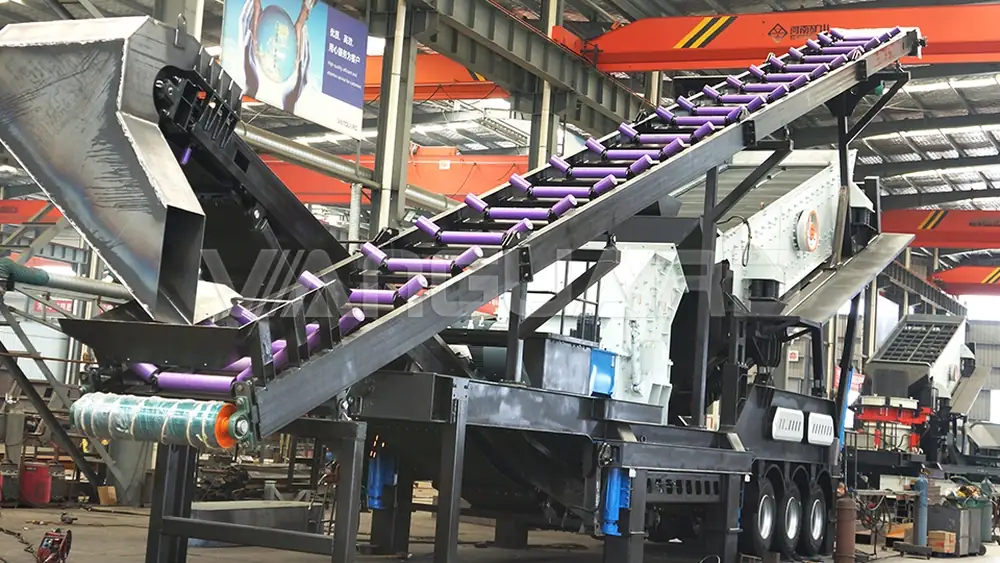
Facing sales talk, a buyer only needs to force three answers. When they are clear, the supplier is screened. - Question one: does it understand my material and my spec? Can it show stage calculation for my feed instead of a template quote? - Question two: can it prove delivery and service with auditable evidence? Certifications, audit, references and FAT all present and verifiable? - Question three: what is the real five-year total cost, not just the equipment line on the quote? Include parts, energy, downtime, relocation. If these three fail, a low price still means caution.
After-Sales and Spare-Parts Network
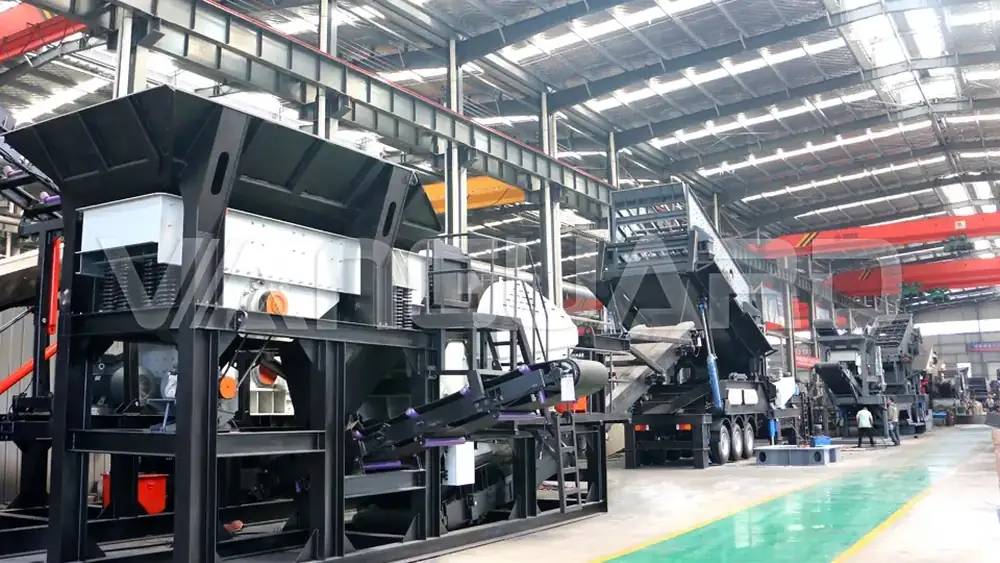
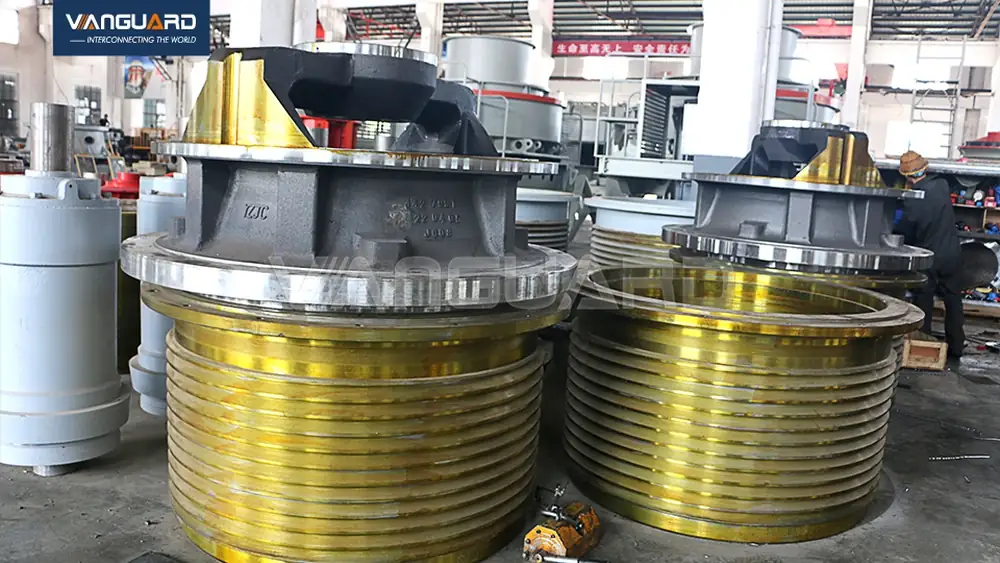
The real cost starts after delivery. Check after-sales on four things. One, a local or regional spare-parts depot where wear parts such as jaw plates, mantles, screen mesh and belts arrive in 24 to 72 hours. Two, resident or contracted service engineers who do remote diagnosis and on-site repair. Three, warranty scope and exclusions: wear parts, misuse and abnormal feed are usually outside. Four, training for operators and mechanics with manuals. Without a parts network, even a cheap plant becomes a stop-supply-equals-stop-production risk. Vanguard Machinery keeps regional depots so this risk stays low.
Customization vs Standard
Standard models ship fast, price transparently and share common parts. Custom models fit your special material or site but take longer, cost more per unit and limit later modification. Advice: if standard modules solve it, do not customize; only go custom when your feed or capacity truly exceeds standard reach, and put spare-part responsibility for custom items in the contract. Vanguard Machinery supplies both standard and tailored modules, so you can start standard and upgrade later.
Total Cost of Ownership Traps
Lowest-bid win is the most common trap. The quote shows only the main machine, hiding high proprietary wear-part prices, higher energy use, high downtime loss and reworked foundations at relocation. TCO over five years at least: equipment price plus parts plus energy plus downtime loss plus relocation plus financing. At the same capacity, A may be 8 percent cheaper than B but cost 20 percent more in three-year parts and downtime, so A is actually dearer.
| Cost item | Often hidden in quote | How to capture it |
| Wear parts | Proprietary, single-source | Ask unit price and life |
| Energy | Higher draw per ton | Compare specific energy |
| Downtime | Attendance, failures | Check references |
| Relocation | Foundation rework | Ask modular readiness |
Red Flags: Suppliers to Avoid
- Refuses to show original certificates or gives vague numbers. - Will not open the workshop, shows only the showroom unit. - Cases are mismatched or the given owner phone never answers. - Skips FAT, claiming it will be fine on site. - Quotes far below market with no clear cost structure. - Contract pushes wear parts, misuse and abnormal feed all to exclusions. - Pressures same-day deposit to force urgency. Two or more of these, walk away.
Payment and Delivery Terms
A healthy schedule: deposit on signing, progress on major components, shipment after FAT, balance after commissioning, retention until warranty ends. Do not push a large share before shipment, or you lose leverage. Write penalty for late delivery and put parts response time into an SLA. Vanguard Machinery standard terms follow the deposit-progress-FAT-balance-retention schedule.
Selection Process at a Glance
String it into one flow: define material and spec, collect three plus proposals, run four-step check, score with three questions, negotiate TCO and terms, sign technical agreement and SLA, audit and FAT, ship and install, stock parts and train. The flow done, risk stays controlled.
Lessons From the Field
- Do: write closed-circuit screening and wear-part life into the technical agreement; run FAT with your own material; secure the regional parts depot before signing; hold retention until warranty ends. - Do not: save 8 percent on the host yet sacrifice the parts network; trust verbal "we will tune it on site"; pay a large deposit without audit and references. - Field note: in quarries and aggregate sites, what truly separates suppliers is not host parameters but whether they open the workshop, let you verify cases, and run loaded FAT. Where these three hold, the rest of the cooperation is mostly safe. Vanguard Machinery, in several overseas aggregate projects, places FAT and the spare-parts list up front in the contract stage to lower the owner's later emergency pressure, a practice worth copying.
FAQ
Qualifications first. A low price from an unqualified supplier is all downside. Screen with the four steps, then compare price among the qualified.
Not necessarily. You can hire a third party or ask for a live video of the workshop and work in progress, but the degree of openness itself is the judgment. A total refusal to open up is a warning.
Strongly yes, with your on-site material type. No-load only proves it spins; loaded proves it makes spec material at the agreed capacity.
By site. Rough, muddy, frequently relocated quarries pick crawler; leveled pads and short-distance multi-site work pick tyre. Crawler units stabilize by wide track and low center of gravity, powering up on arrival.
If your pit advances year by year and you must relocate with mining, modular blocks like MBP bolt together, sit on light foundations and move as a whole, saving much civil work.
Ask depot location and stock depth, get arrival-time commitments for wear parts, and verify with existing owners by phone where possible.
Usually structure and main machine; wear parts, misuse and abnormal feed are mostly excluded. Confirm exclusions line by line before signing.
If standard modules solve it, do not customize. Only go custom for special feed or capacity that standard cannot reach, and put spare responsibility in the contract.
Spread five years: equipment plus parts, energy, downtime loss, relocation and financing. Watching only the host price is the typical trap.
Deposit, progress, shipment after FAT, balance after commissioning, retention. Do not push a large share before shipment; keep leverage.
One flag you can challenge and clarify. Two or more, especially refusal to audit, fake cases, or no FAT, walk away.
OEM is a mature supply model. What matters is the contractor's qualification and the final brand's quality system and warranty ownership. Do not be swayed by "genuine original" talk.
Vanguard Machinery can supply ore analysis, line proposal, mobile and modular equipment selection, FAT support and spare-parts advice, helping buyers put qualification checks and total-cost control up front.
Related Articles
• Why Mobile Crushing Plants Are Becoming Popular in Zimbabwe Mining Projects(2026-07-23)
• Hydraulic vs Spring Cone Crusher: What Sets Them Apart and How to Choose(2026-07-22)
• Why Is My Jaw Crusher Wearing Out Too Fast? Causes and Fixes(2026-07-09)
• Vanguard Machinery Showcases Mobile Crushing and Screening Plants at MINEENTRA 2026 Zimbabwe
• 200 t/h Limestone Crushing-and-Sand-Making Plant in Malaysia: Five-Size Mobile Line
• 300 TPH Mobile Crusher: Configuration, Capacity and Selection(2026-07-22)
• Crawler Mobile Crusher Price: What Drives the Cost of a Crawler Plant(2026-07-20)
• What Is an Impact Crusher? How It Works, Types and How to Choose(2026-07-17)

