


Maintenance Overview
Cone crusher liners are a running operating cost, not a one-time purchase price. The mantle (the moving cone) and the concave (the fixed bowl liner) are a matched wear pair, and their price swings from a few hundred dollars to well over ten thousand, driven by three things: the alloy grade, the crusher size, and how abrasive your feed is. The real number to watch is cost per ton, not the sticker price — a cheap liner often costs more per ton. Below we break down the cost structure, the typical price ranges, and how to actually drive that cost per ton down. Vanguard Machinery prices its liners the same way.
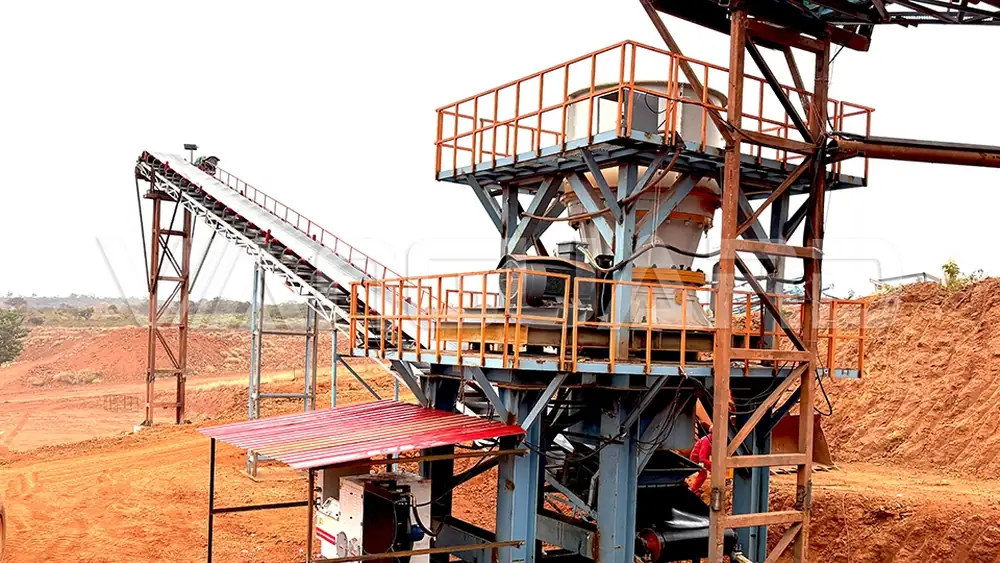
What Mantle and Concave Liners Are
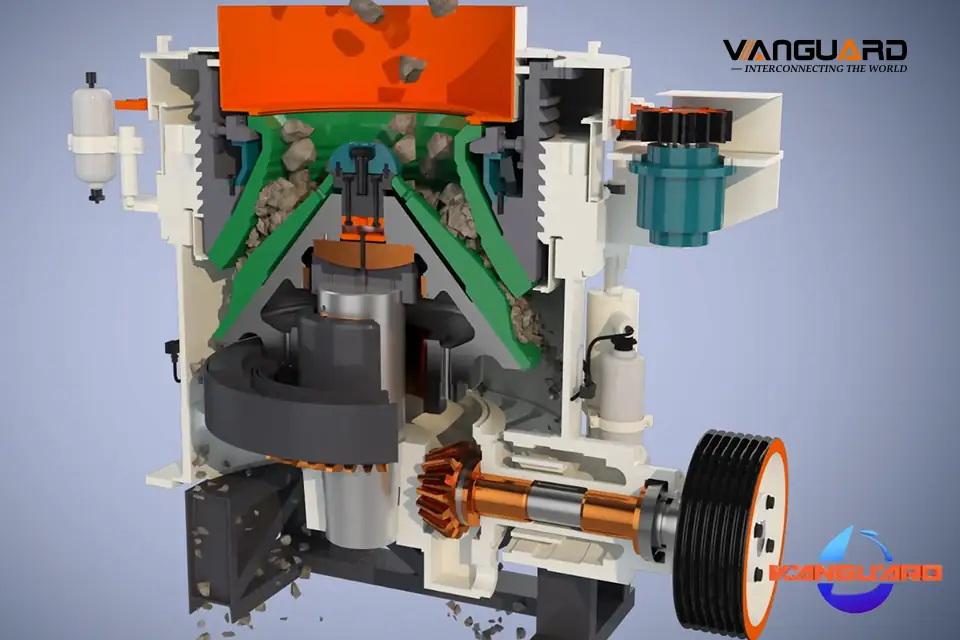
A cone crusher squeezes rock between the mantle, which spins on the main shaft, and the stationary concave bowl. The mantle takes the direct impact and usually wears faster in soft rock; the concave, being fixed, often gives out first in hard, abrasive feed. The two are a matched set, and the cavity profile (coarse / medium / fine) must match your feed gradation. A wrong profile chews through the liner early no matter what you paid for it.
What Drives Liner Cost
The price is not pulled from thin air; it stacks on four layers: - Alloy grade: Mn14 and Mn18 manganese steel up to chrome-added Mn18+Cr and Mn22 — the more wear-resistant, the pricier. Vanguard Machinery defaults to Mn18+Cr on hard rock. - Crusher size: a 100 t/h chamber and a 300 t/h chamber differ in molten-steel weight by several times, so does the price. - Cavity and profile: coarse / medium / fine, and thickened profiles, use different amounts of metal. - OEM vs aftermarket: genuine liners cost more for the drawing, heat treatment and NDT; aftermarket spans a wide price-and-quality range.
| Cost driver | Low end | High end | Note |
| Alloy | Mn14 manganese | Mn22 / alloy | wear-resistance costs |
| Machine | 100 t/h chamber | 300 t/h chamber | molten steel decides |
| Channel | aftermarket | OEM genuine | OEM for QC |
| Profile | standard | extra-thick / custom | custom adds cost |
Typical Price Ranges by Material and Crusher Size
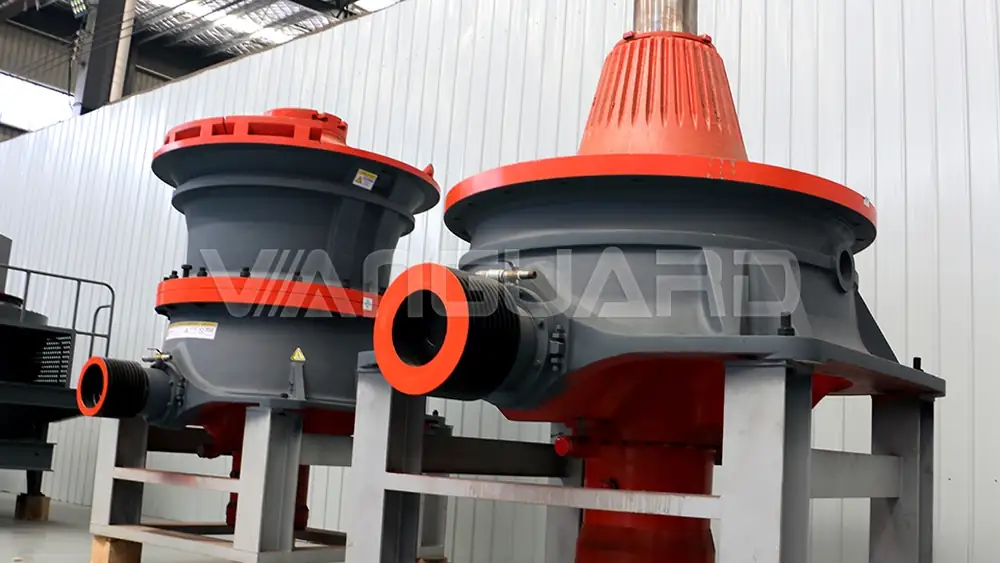
The table below is a 2026 ex-works market reference in USD, excluding tax and freight — a calibration baseline, not a quote. For a common secondary cone (~200 t/h class): Vanguard Machinery quotes its standard cavities in this band.
| Alloy | Mantle (moving) | Concave (fixed) | Life ref. | Best for |
| Mn14Cr2 | 800–1,800 | 600–1,600 | 800–1,200 h | limestone, low abrasion |
| Mn18Cr2 | 1,200–2,800 | 1,000–2,400 | 1,200–1,800 h | general quarry |
| Alloy / Mn22 | 2,500–4,500+ | 2,200–3,800+ | 1,500–2,500 h | granite / basalt / iron ore |
By machine class, a single set (mantle + concave) runs roughly: 100 t/h Mn14 about 1,800–2,800, Mn18+Cr about 2,200–3,400; 200 t/h Mn14 about 3,000–4,500, Mn18+Cr about 3,600–5,500; 300 t/h Mn14 about 4,500–6,500, Mn18+Cr about 5,500–8,000. Large chambers on hard rock with alloy can exceed 6,000.
How to Cut Cost per Ton
The sticker price lies. A 900-dollar liner lasting 4 weeks versus a 2,200-dollar alloy liner lasting 14 weeks — once you add downtime and change-out labor, the expensive one wins. Practical moves: - Match alloy to abrasion: Mn14 is enough for soft limestone; granite, basalt and iron ore demand Mn18+Cr, Mn22 for the worst. When unsure, run an abrasion test instead of guessing. - Cavity and feed: a CSS tighter than needed accelerates wear exponentially; keep a choke feed so wear spreads evenly. Vanguard Machinery field data shows an over-tight CSS halves liner life. - Buy in bulk: ordering 6–12 sets at once typically saves 10–15% per set and locks one heat of steel. - Reversible profiles: some profiles flip or rotate for a second life, adding 50–100% to service life. - Quarterly wear monitoring: proactive CSS and ahead-of-time spares beat emergency fixes by over 25%.
Vanguard Machinery usually advises hard-rock operators to spec Mn18+Cr by abrasion, and the annual liner bill often lands 20–35% below a bare-price-only buying habit.
Daily, Weekly and Monthly Checklist
Vanguard Machinery's maintenance sheet treats the three checks below as baseline. - Daily: listen for odd noise, watch product shape; check every bolt torque; confirm lube pressure and temperature are normal. - Weekly: measure remaining mantle and concave wall thickness into a log; verify tramp-release responds; clear magnets / metal separators. - Monthly: strip-inspect the full liner set for even wear and cracks; tally run hours against the life curve to schedule the next change; verify actual CSS.
Troubleshooting Quick Reference
In Vanguard Machinery's fault log, uneven wear and cracks dominate. | Symptom | Likely cause | Fix | |------|------|------| | Uneven wear | feed segregation, no choke | fix feed, even it out | | Liner crack | loose bolts, thermal stress | torque to spec, ramp load | | Short life | wrong profile, CSS too tight | change profile, open CSS | | Poor shape | liner worn through, cavity dead | replace in time | | Noise / burn | tramp metal, lube failure | check magnets, check oil |
When to Rotate and Replace
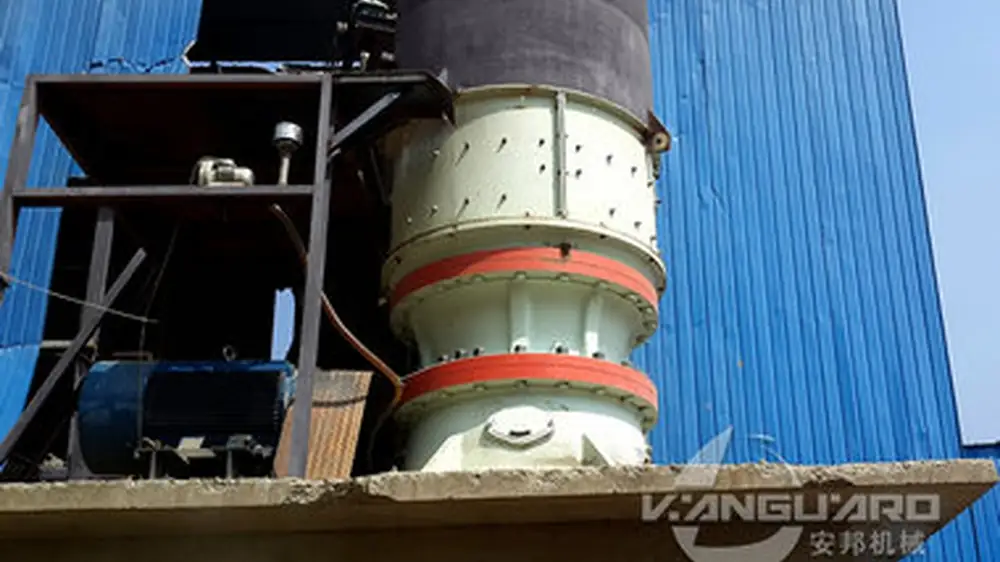
Do not wait until the liner is worn through. Replace when remaining wall thickness hits the design floor, a through-crack appears, or product shape visibly degrades. A reversible profile buys extra life with one flip. When you change liners, clean the mating faces, torque to spec and run a no-load break-in — that decides how long the next set lasts. For a full hard-rock life-extension playbook, see the granite cone maintenance guide.
Vanguard Machinery field engineers usually schedule the change rather than wait for a shutdown — a planned liner swap keeps both labor and steel predictable.
Lessons From the Field
The pattern repeats on site: the most expensive liner is not always the best value, and the cheapest is almost always the worst — it wears out in weeks and the downtime plus change-out labor eat the saved price. Real savings come from matching alloy to your rock: Mn14 on a limestone line is right; Mn14 on a granite line is the real waste. The other blind spot is cavity profile; a wrong profile chews the liner early and has nothing to do with price. Then bulk: a line running steadily all year, buying half a year's volume at once, gets a better unit price and one consistent heat of steel. Last, treat liners as an operating ledger, not a purchase order — log hours and tonnes per set and the cost per ton is obvious at a glance.
FAQ
A small-chamber (100 t/h) set runs about 1,800–3,400 USD ex-works by alloy; a large chamber (300 t/h) Mn18+Cr can reach 5,500–8,000. 2026 market reference, ex-tax and freight.
The mantle (moving) wears faster in soft rock; the concave (fixed) gives out first in hard, abrasive feed. Replace the pair together.
Mn14 manganese is cheap and fine for low-abrasion limestone; Mn18+Cr adds chrome, wears far better and is the hard-rock quarry default — pricier but longer-lived.
Short life means downtime and change-out labor eat the saved purchase price; cost per ton ends up higher.
Match alloy to abrasion, keep a choke feed, do not over-tighten CSS, flip reversible profiles, and measure thickness quarterly.
At design minimum wall thickness, on a through-crack, or when product shape degrades — do not wait for a blow-through.
Genuine liners win on drawing, heat treatment and inspection; aftermarket spans wide quality. On big lines and hard rock, use OEM or a proven aftermarket source.
Yes — 6–12 sets at once typically saves 10–15% per set and locks one heat of steel, ideal for steady-running lines.
A mismatched profile wears the liner early and ruins shape; it is unrelated to price. Pick coarse / medium / fine by feed gradation.
Heavily — tighter than needed accelerates wear exponentially; open it to just what the product needs.
Granite, basalt and iron ore want Mn18+Cr, Mn22 for the worst; the annual bill often lands 20–35% below Mn14.
Log hours and tonnes per set, then (liner price + change-out labor) ÷ tonnes; compare alloys on that basis, not the sticker.
Conclusion
Cone liners have no single price; the levers are alloy, machine size and your feed. Do not be led by the sticker: match alloy to abrasion, pick the right cavity, keep a choke feed and plan changes off the life curve, and the cost per ton falls on its own. Not sure? Run the numbers by material and tonnage, and Vanguard Machinery can do a free material analysis before you buy.
Related Articles
- Hydraulic vs Spring Cone Crusher: What Sets Them Apart and How to Choose
- Crawler Mobile Crusher Price: What Drives the Cost of a Crawler Plant
- 300 TPH Mobile Crusher: Configuration, Capacity and Selection
- What Is a Crawler Type Mobile Plant? How It Works and How to Choose
- Why Is My Jaw Crusher Wearing Out Too Fast? Causes and Fixes (2026 Guide)
- How to Maintain a Crawler Type Mobile Jaw Crushing Plant
- How to Choose the Right Crawler Type Mobile Impact Crushing Plant for Your Project

