


Key Takeaways
Indonesia holds the world's largest nickel reserves and has banned raw ore exports since 2020, so every ton of nickel must be crushed and washed locally before it feeds an RKEF pyrometallurgical ferronickel line or an HPAL hydrometallurgical line. Unlike granite or limestone, nickel ore (laterite especially) is high in moisture and clay and very sticky. The real question is not "how fine can I crush it" but "how do I stop it clogging and how do I shed the mud and water". The three-question method below helps you decide how your line should be built.
Know Your Ore: Laterite vs Saprolite
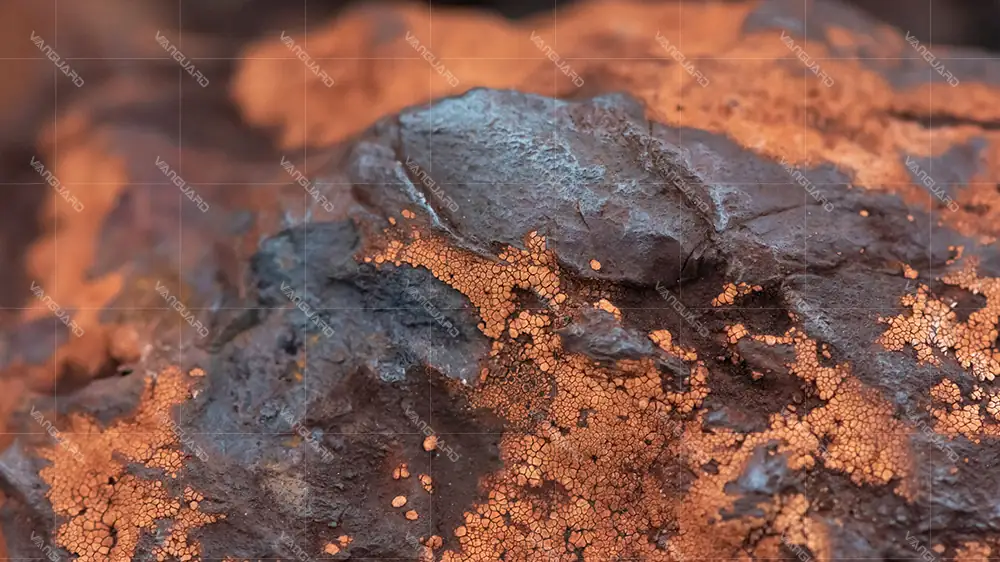
Indonesian nickel comes in two layers. The top laterite is soft, very moist (up to 30%+ in the rainy season), sticky and low-abrasion; feed it straight into a fine crusher and it cakes instantly. The lower saprolite is harder and is the main feed for RKEF ferronickel, so it follows the classic jaw-plus-cone hard-rock route. Sort your ore into one of these two camps first, and every later equipment choice gets easier.
Three Questions to Pick the Right One
- Question 1: Are you handling laterite or saprolite? Laterite takes a "wash plus roll/hammer" anti-clog route; saprolite takes a "jaw plus cone" hard-rock route. - Question 2: Where does the crushed product go? RKEF ferronickel wants 10–50 mm lump into the rotary kiln; HPAL wants finer, low-clay slurry, so washing carries more weight. - Question 3: How wide is your moisture and clay window? In the rainy season with high water and mud, you must budget for a washing screen and a closed circuit, or your capacity collapses.
Typical Configuration for Indonesian Nickel Projects
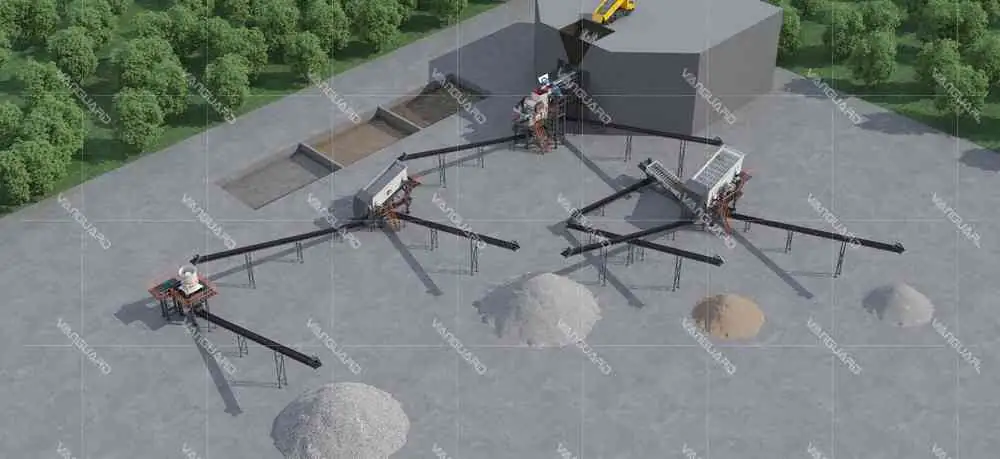
Laterite (HPAL / export): grizzly feed → jaw or hammer primary → washing screen (high-pressure spray) → closed-circuit return crushing; when stickiness is severe, a toothed roll crusher replaces the cone to avoid clogging. Saprolite (RKEF ferronickel): jaw crusher (6CX/PE) primary → cone crusher (CS·CH) secondary → vibrating screen, keeping product at 10–50 mm. Mobile or stationary: nickel ore is sticky, wet and tied to washing, so a stationary line is steadier and simpler; mobile units only pay off for dry-season haul roads, exploration stripping or early ramp-up.
Washing and Anti-Clog Decide Success
About 80% of nickel-project problems are clogging: mud plugs the screen apertures, wet material balls up in the chutes. Size the washing screen generously, keep belts and chutes steep, and add a scrubber drum upstream if needed. This is something a granite or limestone line never worries about, yet it is the make-or-break point for nickel.
Common Selection Mistakes
- Forcing a cone crusher onto high-moisture laterite, so the chamber packs and capacity is halved. - Budgeting only for crushers and forgetting the washing screen, then clogging on day one of the rainy season. - Crushing RKEF lump too fine, which hurts kiln reduction efficiency. - Ignoring Indonesia's six-month rainy season and quoting dry-season peak capacity, then missing the contract on delivery.
Field Note
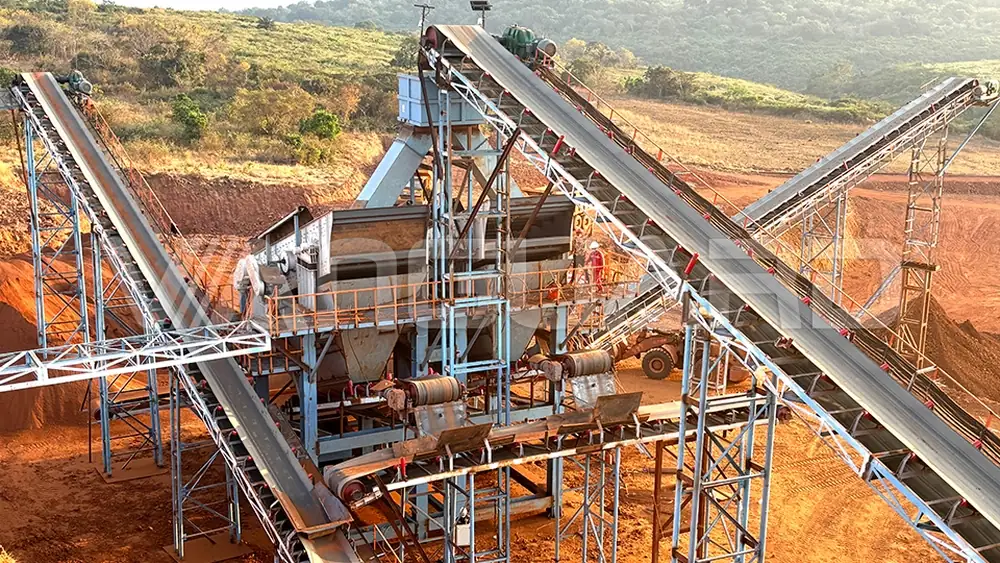
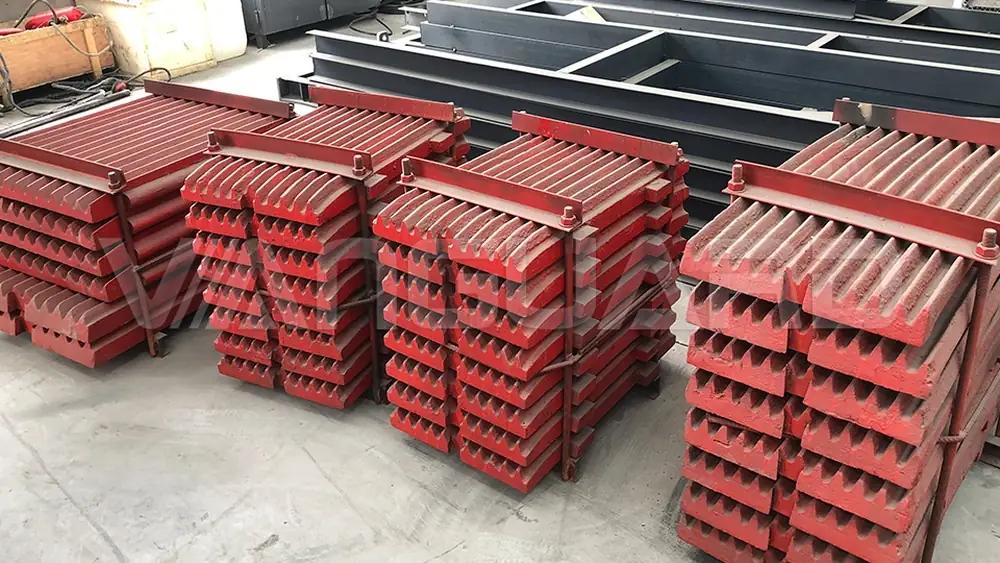
On sites in Sulawesi and Halmahera, the lines that run smoothly share a pattern: 30% spare capacity on washing, quick-detach key chutes, and local stock of wear parts (jaw plates, mantles). Nickel is low-abrasion, but wet grinding plus slurry scour still eats screens and liners, above all in the washing stage, so the spares budget deserves its own line.
Recap of the Three Questions
Back to the three questions: ore type sets the route (laterite wash + roll/hammer, saprolite jaw + cone), process sets the size (RKEF lump, HPAL fine), moisture and clay set the layout (high water demands a washing closed circuit). Send us your ore properties, moisture and clay, target capacity and destination process, and Vanguard Machinery (a Chinese-made crushing and grinding equipment brand) will run a free ore analysis and line proposal.
FAQ
Yes, but not as the primary. Wet, clay-rich laterite packs the cone chamber and kills capacity; if you must use one, place it after the washing screen so the mud and water are gone first. Most projects primary-crush with a jaw or hammer and switch to a toothed roll when stickiness is bad.
Once run-of-mine moisture passes about 8–10% with high clay (minus 0.074 mm), the washing screen belongs in the config. In the Indonesian rainy season surface ore often hits 25–30% moisture, which is basically a wash-plus-closed-circuit standard, or the screens plug and capacity drops by half.
Most RKEF rotary kilns take 10–50 mm lump; too-fine slime cakes and chokes the kiln. So a saprolite line weights grading over fine crushing, and holding the fines back in a screening loop matters more than crushing the lump smaller.
Not really for sticky ore. Mobile shines at fast relocation, but nickel needs washing and fixed receiving, and a mobile line struggles in the rainy season. It fits dry-season haul roads, exploration stripping or early ramp-up better.
Do not quote dry-season peak. Account for the low-efficiency rainy months in annual run days, or take wet-season capacity at a 60–70% design margin, so you do not breach the contract at handover.
Abrasion is low, but wet grinding plus slurry scour still wears screens, chute liners and wear parts, especially in washing. Keep a separate spares budget and local stock of key items.
RKEF wants kiln feed lump, so it weights crushing plus grading; HPAL wants fine slurry, so it weights washing plus grinding and the crushing stage is shorter. The same ore to different processes needs very different setups.
Laterite: grizzly feed + jaw/hammer primary + washing-screen closed circuit + toothed roll (if sticky). Saprolite: jaw (6CX) + cone (CS·CH) + vibrating screen at 10–50 mm. The exact mix follows ore type and destination process; start with an ore analysis.
Mainstream Chinese-made equipment (jaw plates, mantles, screens) already has a supply network around Sulawesi. Pick a brand with local stock and service; Vanguard Machinery can supply ore analysis and a spares plan.
Related Articles
• Hydraulic vs Spring Cone Crusher: What Sets Them Apart and How to Choose(2026-07-22)
• Why Is My Jaw Crusher Wearing Out Too Fast? Causes and Fixes(2026-07-09)
• 300 TPH Mobile Crusher: Configuration, Capacity and Selection(2026-07-22)
• Vanguard Machinery Showcases Mobile Crushing and Screening Plants at MINEENTRA 2026 Zimbabwe
• 200 t/h Limestone Crushing-and-Sand-Making Plant in Malaysia: Five-Size Mobile Line
• Why Mobile Crushing Plants Are Becoming Popular in Zimbabwe Mining Projects(2026-07-23)
• Crawler Mobile Crusher Price: What Drives the Cost of a Crawler Plant(2026-07-20)
• What Is an Impact Crusher? How It Works, Types and How to Choose(2026-07-17)

