


Project Overview
This case is a 500 t/h andesite crushing line at a quarry on Java, Indonesia. Run-of-mine is hauled from the hilltop by mine trucks and dumped straight into the primary surge bin. The plant targets 500 tonnes per hour with four spec products — 0–5 mm, 5–10 mm, 10–20 mm and 20–30 mm — feeding surrounding highway projects and ready-mix plants. The line is stationary, fed from the municipal grid.
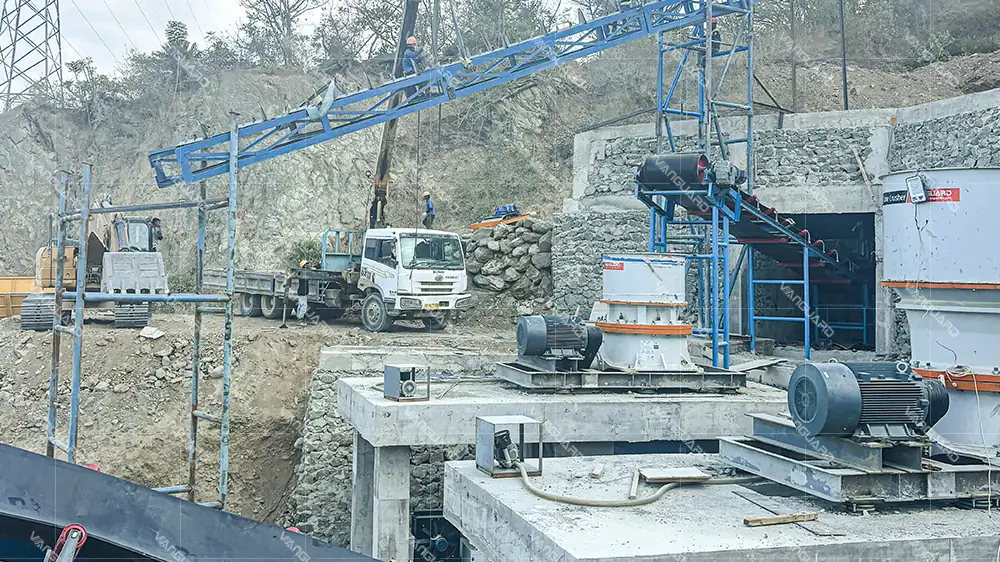
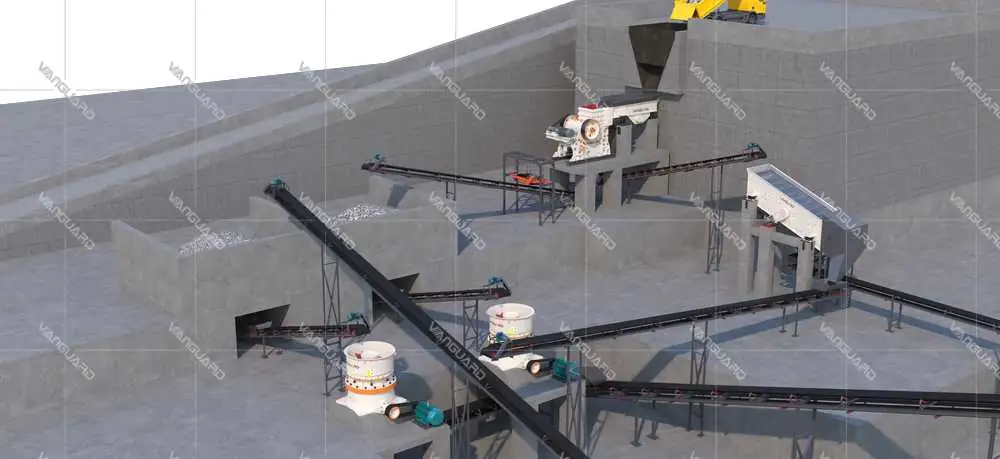
In one line: ZSW600×130 feed → 6CX125 jaw primary → RCYD-12 tramp iron separator → surge bin → GZD1225 feed → CS 840 cone secondary → 3-YK3075 main screen → CH 840 cone tertiary → 3-YK2870 secondary screen → 2-YK1860 final screen.
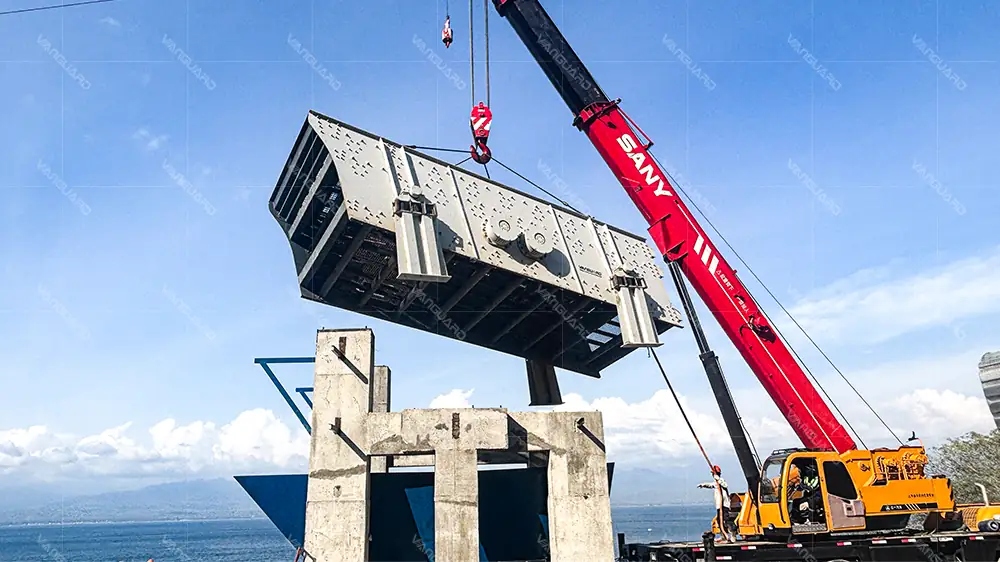
Customer Requirements
Designed at 500 t/h, about 1.3 million tonnes per year, two shifts, 330 working days. The customer values continuous operation — even one grid outage during peak season hurts the order book.
Four spec aggregates: 0–5 mm manufactured sand, 5–10 mm, 10–20 mm and 20–30 mm, all going into ready-mix concrete and asphalt. Each fraction must stay stable, with low flakiness on the 10–20 mm fraction because that size goes straight into the surface layer.
A stationary plant sits tight to the stockpile yard; belt conveyors feed the stockpile and the batching plant directly, cutting re-handling cost.
Material Analysis
Andesite is a volcanic extrusive rock at Mohs 5–6 — slightly harder than granite and tougher. Pores and volcanic glass phase inside the matrix make liners and blow bars wear fast.
SiO₂ around 55–65%, high-abrasion hard rock. Secondary crushing must wear-resist; impact crushers get hammered in this rock.
The site is tropical with a six-month rainy season. Run-of-mine carries surface moisture and fines stick to decks. Midday temperatures near 32 °C push lube and belt-cleaner performance; both need attention.
Process Design
Run-of-mine feeds the ZSW600×130 vibrating feeder into the 6CX125 jaw crusher, which primes to ≤ 150 mm. A RCYD-12 overband magnetic separator drops any tramp rebar or steel picked up with the load. A belt conveyor lifts discharge into the surge bin; a GZD1225 bar feeder meters it into the CS 840 single-cylinder cone crusher, which takes the rock down to ≤ 40 mm. Crushed product goes onto the 3-YK3075 circular vibrating screen: top deck 20–30 mm, middle deck 10–20 mm drop as finished products; the < 10 href="https://www.vanguardtec.com/crushers/CS-CH-single-cylinder-cone-crusher.html" rel="nofollow" target="_blank" style="color:#3d95ee;text-decoration:underline">CH 840 single-cylinder cone crusher in short-head cavity, which crushes to ≤ 10 mm. The crushed stream hits the 3-YK2870 circular vibrating screen for 5–10 mm product; the < 5 href="https://www.vanguardtec.com/crushers/YK-vibrating-screen.html" rel="nofollow" target="_blank" style="color:#3d95ee;text-decoration:underline">2-YK1860 circular vibrating screen for 0–5 mm manufactured sand. Each screen's oversize returns to its matching cone by size, closing the circuit.
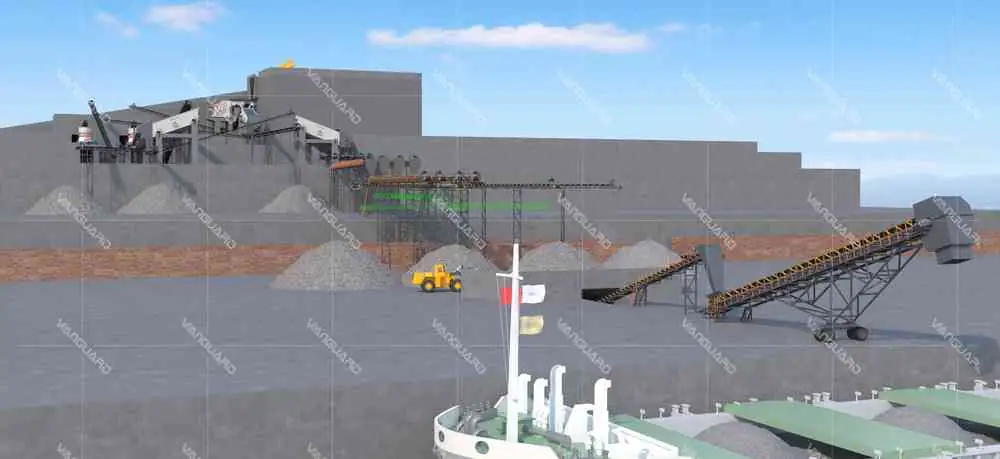
Andesite sits high in SiO₂ and abrasion; impact blow bars flip and replace too often. Cone liners last 1.5–2× longer and cut the cost per tonne — impact simply does not pay here.
A two-stage circuit covers 20–30 mm and 10–20 mm cleanly but cannot push enough < 5>
Equipment Configuration
| No. | Stage | Equipment | Note |
| A1 | Feed | ZSW600×130 vibrating feeder | with grizzly, scalps fines |
| A2 | Primary | 6CX125 jaw crusher | 1250 mm-class inlet, takes 600–700 mm lumps |
| A3 | Tramp iron | RCYD-12 overband magnet | suspended, drops rebar and steel scrap |
| C1 | Transfer | B800 belt conveyor + surge bin | joins primary to secondary, bin ≈ 80 t |
| A4 | Secondary feed | GZD1225 bar feeder | heavy-duty, 40 mm bar gap |
| A5 | Secondary | CS 840 single-cylinder cone crusher | standard cavity, 32 mm CSS |
| A6 | Main screen | 3-YK3075 circular vibrating screen | three decks, discharges 20–30 / 10–20 mm |
| A7 | Tertiary | CH 840 single-cylinder cone crusher | short-head cavity, 10 mm CSS |
| A8 | Secondary screen | 3-YK2870 circular vibrating screen | three decks, discharges 5–10 mm |
| A9 | Final screen | 2-YK1860 circular vibrating screen | two decks, discharges 0–5 mm manufactured sand |
Production Performance
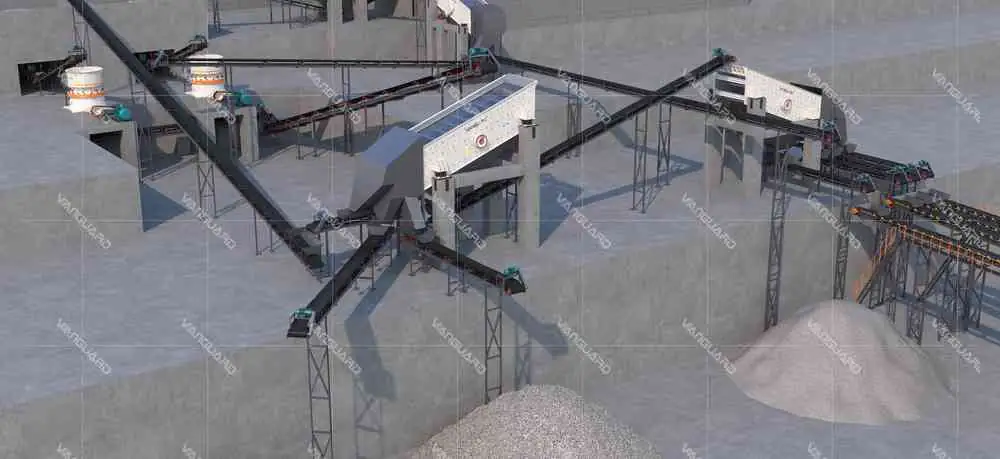
Real gradings held close to design: 20–30 mm at 28%, 10–20 mm at 32%, 5–10 mm at 22%, 0–5 mm at 18%. The 10–20 mm fraction held flakiness under 8% — clean for surface-layer aggregate.
CS 840 liners gave about 28 days of life; CH 840 short-head liners about 18 days. Both matched the design curve. Jaw plates held over six months.
Dry season held 510–520 t/h consistently. Rainy season swung within ±8% on moisture spikes. Customer shipped about 1.32 million tonnes across the year, above target.
The line drew roughly 1.9 kWh per tonne — most of it on the two cone stages and screens. Cone crushing saved about 0.3 kWh/t versus an impact setup.
Lessons Learned
- ✔ For high-abrasion hard rock, single-cylinder cone wins in secondary and tertiary over impact, on both wear and cost - ✔ Three-stage crushing plus three screens gives stable four-spec output with low flakiness - ✔ Pre-screening and a proper surge bin are critical to survive the tropical rainy season - ✔ The C1 transfer belt needs a pull-rope switch and speed sensor fitted at install — overloading a wet belt will tear it - ❌ The CH 840 was originally fitted with a standard cavity and produced 5–10 mm that ran coarse; switching to short-head cavity and dropping the eccentric throw one step fixed it
Frequently Asked Questions
Andesite is silica-rich and abrasive. Cone liners last 1.5–2× longer than impact blow bars, and the shape comes out cleaner with lower flakiness — exactly what surface-layer aggregate needs.
A single jaw gives ≤ 150 mm and a two-stage circuit barely reaches 0–5 mm. A third short-head cone plus two more screens, with oversize returned by size to the matching cone, locks all four fractions and keeps grading stable.
Tertiary cone in short-head cavity with low eccentric throw; the final screen's underflow passes through an optional fines-removal screen to control the < 0>
Pre-screening at the feeder scalps fines early; the heavy-duty GZD1225 bar feeder breaks sticky arches over the surge bin; high-pressure wash water under the screen decks keeps the mesh clear.
CS 840 standard cavity gives about 28 days; CH 840 short-head gives about 18 days. Inspections follow the wear curve and liners get flipped or replaced in batch; spares are staged on site so downtime stays short.
Trucks and blasting bring rebar and steel into the primary feed. Removing tramp iron before the cone stages protects the manganese liners and the hydraulic cylinders; on a hard-rock abrasive line this is standard practice.
Roughly 60 t or larger — about three minutes of full-feed from the jaw. Too small makes the GZD hunt and over-stresses the screens; too large drives up civil cost without gain.
Related Articles
• Hydraulic vs Spring Cone Crusher: What Sets Them Apart and How to Choose(2026-07-22)
• Why Is My Jaw Crusher Wearing Out Too Fast? Causes and Fixes(2026-07-09)
• Vanguard Machinery Showcases Mobile Crushing and Screening Plants at MINEENTRA 2026 Zimbabwe
• 200 t/h Limestone Crushing-and-Sand-Making Plant in Malaysia: Five-Size Mobile Line
• Why Mobile Crushing Plants Are Becoming Popular in Zimbabwe Mining Projects(2026-07-23)
• 300 TPH Mobile Crusher: Configuration, Capacity and Selection(2026-07-22)
• Crawler Mobile Crusher Price: What Drives the Cost of a Crawler Plant(2026-07-20)
• What Is an Impact Crusher? How It Works, Types and How to Choose(2026-07-17)

