


Quick Answer
Hydraulic and spring cone crushers (the Symons-style) are both workhorse compression crushers for secondary and tertiary duty; the gap is in setting adjustment, protection and automation. The hydraulic cone crusher (multi-cylinder CP series, single-cylinder CS/CH series) adjusts the discharge setting with one touch, auto-clears tramp iron, and runs a laminated crushing chamber for better shape and higher in-spec yield, with load-on adjustment and less downtime — ideal for hard rock at continuous high tonnage. The spring cone crusher (CSV Symons series) relies on spring mechanical overload relief and shim/ring setting, keeping it simple, rugged, cheap and easy to service — right for tight budgets and moderate output. Need throughput, shape and uptime? Go hydraulic. Need rugged and cheap? Go spring. Vanguard Machinery builds all three; need a pick? Contact Vanguard Machinery for a free material analysis and tailored recommendation.
Key Takeaways
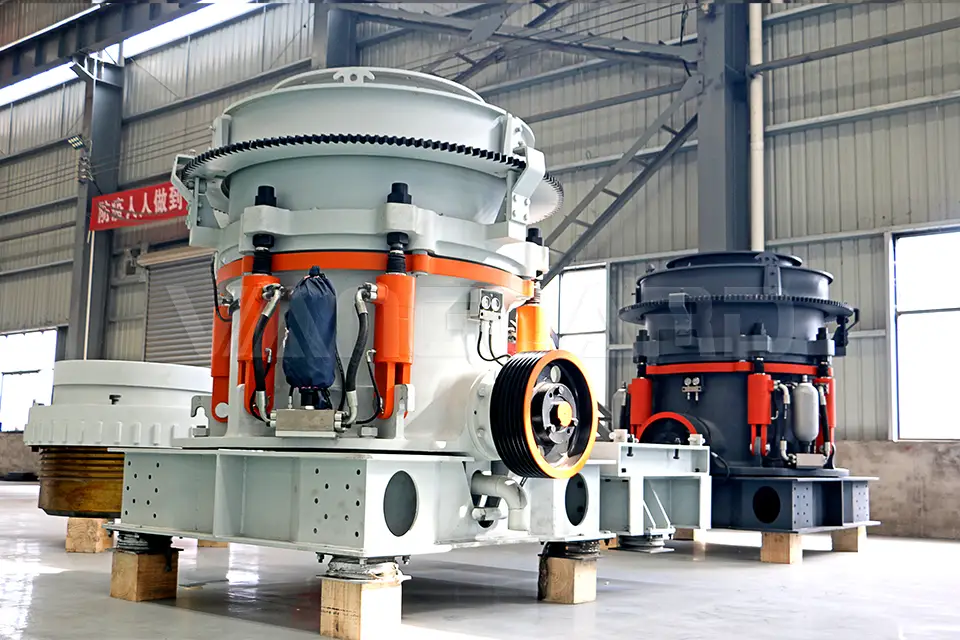
- ✔ Both are compression secondary/tertiary cone crushers; the real gap is setting adjustment, tramp protection and automation - ✔ Hydraulic (CP multi-cylinder / CS·CH single-cylinder): one-touch setting, auto tramp clearing, laminated shape, load-on adjust, less downtime - ✔ Spring (CSV Symons): spring mechanical relief, shim/ring setting, simple and rugged, low price, easy service - ✔ Capacity and shape: hydraulic (especially multi-cylinder) is higher and steadier; spring sits mid, classic and reliable - ✔ How to choose: hard rock, high tonnage, shape and uptime -> hydraulic; tight budget, moderate output, easy service -> spring
What the Two Cone Crushers Actually Differ In
A cone crusher is fundamentally the same class of compression machine; the difference is not whether it crushes, but how the setting is changed, how tramp is ejected, what shape and yield you get, and how it is serviced day to day. Those four decide whether you buy a "care-free machine" or a "cheap machine".
Hydraulic Cone Crusher: Structure and Principle
Hydraulic is the mainstream upgrade of recent decades.
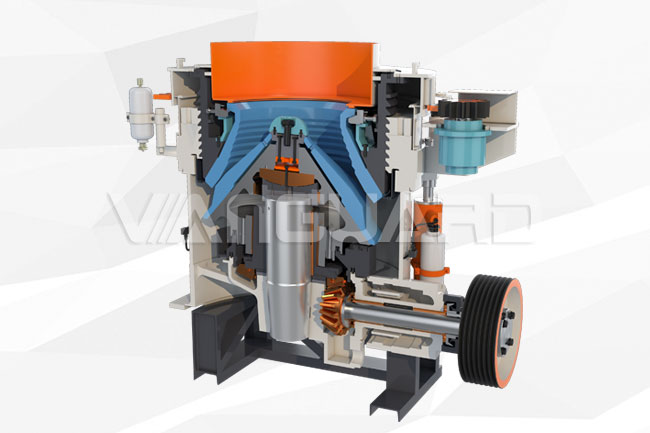
Hydraulic cones split into multi- and single-cylinder. The multi-cylinder CP series places several hydraulic cylinders around the main shaft for high rigidity and capacity, strong in high-tonnage medium-fine crushing. The single-cylinder CS/CH series uses one central cylinder that combines setting, tramp release and cavity clearing — compact and smart. Both lean on hydraulics for the key moves.
The headline is "hydraulics replace hand work": the discharge setting is adjusted with one touch even under load, no stop, no shim removal. When iron or foreign matter enters, the cylinder lifts the shaft to eject it, then auto-returns — clearing barely stops the line. Paired with a laminated chamber, the product is cleaner and more cubic with fewer flats.
Spring Cone Crusher: Structure and Principle
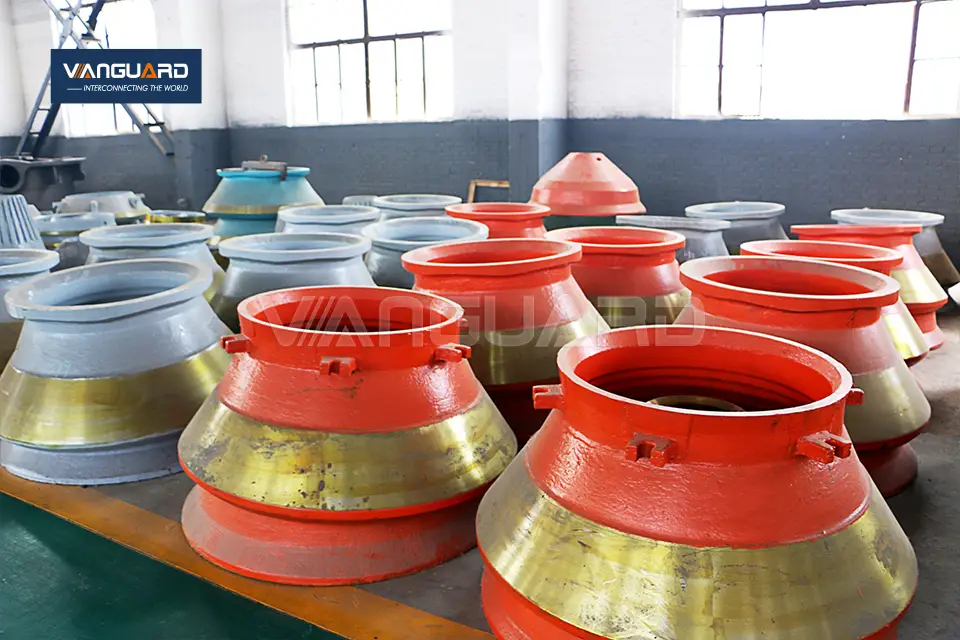
The spring cone is the classic Symons structure — the "old reliable" proven for decades.
The CSV series follows the Symons spring cone layout: the main shaft rides in a spherical bearing, crushing force supplied by the spring pack. The structure is easy to read, most fitters know it, and spares are widely interchangeable.
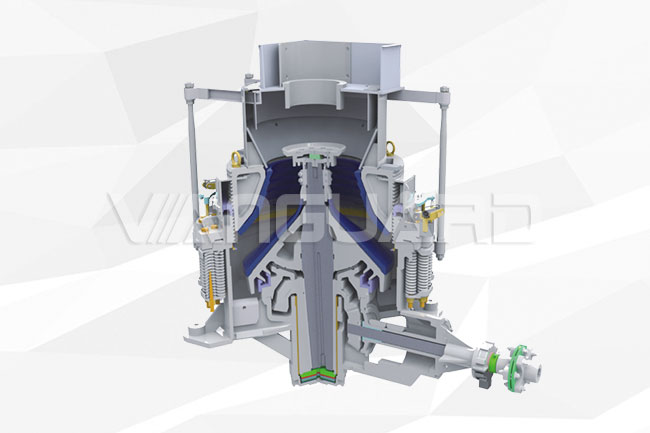
Under overload the spring compresses and the relief lifts to eject the tramp; but setting change uses shims or a ring push, usually needing a stop and manual or auxiliary help. It takes the load and it crushes — it just "does not adjust as smartly".
Core Comparison: Structure and Adjustment
| Aspect | Hydraulic cone (CP / CS·CH) | Spring cone (CSV Symons) |
| Setting adjustment | One-touch hydraulic, under load | Shim/ring, often needs stop |
| Overload protection | Hydraulic lift, auto clearing | Spring compression, often manual clear |
| Crushing chamber | Mostly laminated, good shape | Classic chamber, mid shape |
| Automation | High, remote monitoring | Low, manual |
| Complexity | Higher (hydraulics on board) | Simple and rugged |
| Service threshold | Needs hydraulic oil/seal care | Fitters know it, easy service |
| Price | Higher | Lower |
Performance: Capacity, Shape, Yield
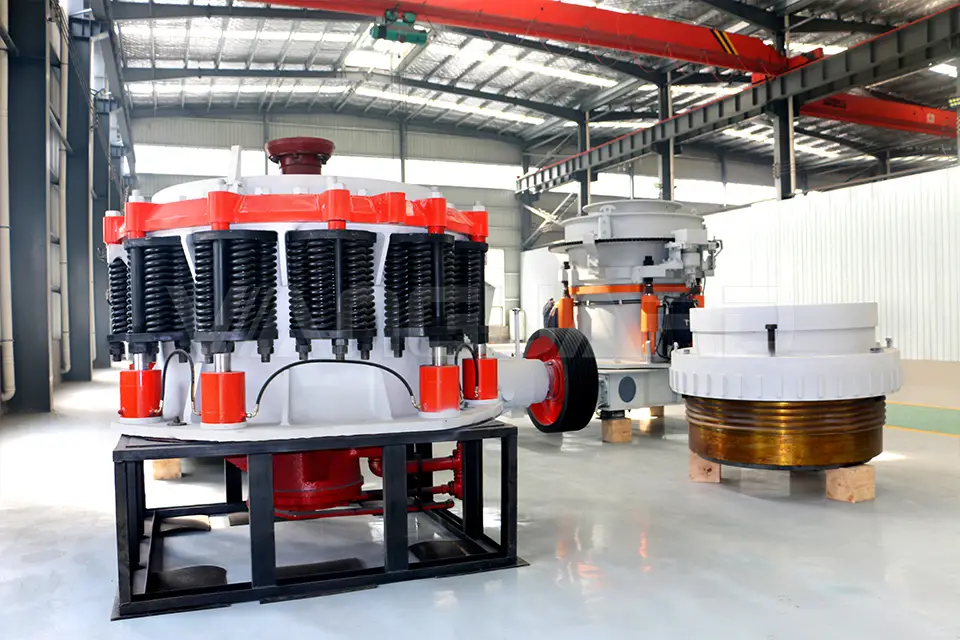
The hydraulic cone (especially multi-cylinder CP) gives higher, steadier capacity at the same opening, and laminated crushing makes the product more cubic with fewer flats. The spring cone is steady and reliable, shape a step behind, but plenty for medium-coarse specs.
The hydraulic laminated chamber lifts in-spec yield and cuts return crushing, lowering relative per-ton consumption. Spring returns a bit more and runs slightly higher fines. If your rock is hard and you need high yield, hydraulic pays; if the feed is average and output moderate, spring still delivers conforming product.
| Aspect | Hydraulic cone (CP / CS·CH) | Spring cone (CSV Symons) |
| Same-opening capacity | High, steady | Mid, steady |
| Shape (cubical) | Good, few flats | Mid |
| In-spec yield | High, less return | Lower, a bit more return |
| Best feed | Hard, abrasive shows edge | Medium-hard and below, reliable |
| Fines | Lower | Slightly higher |
Maintenance, Reliability and Value
The hydraulic system needs periodic oil change and seal checks; a leak or stuck valve can hit the line — but auto tramp clearing slashes unplanned stops. The spring machine has almost nothing hydraulic to fail, rugged and durable, yet manual clearing after tramp means longer stops.
The spring cone is cheap to buy and cheap to spare, low upfront. Hydraulic costs more upfront, but high capacity plus high yield plus less downtime dilute the per-ton cost. Run big and continuous and hydraulic's total cost is often lower; run small and intermittent and spring is the better deal.
How to Choose: Hydraulic or Spring
Hard rock (granite, river pebble), abrasive feed, demand for high shape and high yield, continuous large-scale production, want automation and remote monitoring — prefer multi-cylinder CP (high-tonnage fine crushing) or single-cylinder CS/CH (compact and smart).
Tight budget, moderate output, not-too-hard feed, average site service, want rugged and cheap, or replacing an old line / backup unit — the CSV Symons series is a safe, cost-effective pick.
| Your condition | Recommend | Vanguard model |
| Hard rock, high tonnage, shape + uptime | Hydraulic multi-cylinder | CP series |
| Compact smart, mid capacity | Hydraulic single-cylinder | CS / CH series |
| Tight budget, medium-hard, easy service | Spring Symons | CSV series |
Typical Process Flow (where the cone sits)
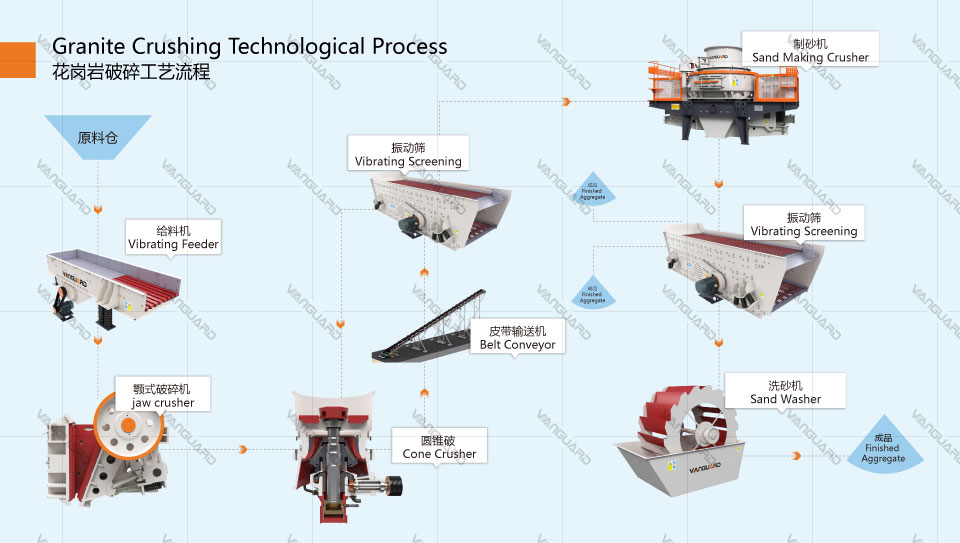
Feed -> ZSW grizzly/vibrating feeder (scalps clay/fines) -> jaw crusher (PE / 6CX, primary) -> cone crusher (secondary: hydraulic CP/CS·CH or spring CSV) -> vibrating screen (sizing) -> finished aggregate (0-5 / 5-10 / 10-20 mm); oversize returns to the cone in closed circuit. Hydraulic and spring both hang on this line — only the secondary machine swaps type.
Lessons From the Field
What really decides whether a cone works well, from lines we support.
How often you change the setting decides hydraulic vs spring. Jobs where feed and spec change daily, one-touch load-on setting saves huge downtime; a fixed-spec old line can live with one spring stop-adjust. First ask "how often do I change the setting".
Tramp iron is the spring's sore point. Hard abrasive rock hides iron; after a jam the spring needs manual clearing for hours, while hydraulic auto-clears and resets in minutes. On iron-heavy sites the hydraulic uptime edge grows.
Do not compromise on shape where it matters. Ready-mix and asphalt are sensitive to flats; the hydraulic laminated chamber is steadier. If you only make road base, the spring shape still qualifies. Set the standard by end use, and do not overpay for a spec you will not use.
Selection Checklist and Common Mistakes
1. Is the feed hard and abrasive? Hard -> lean hydraulic; medium-hard -> either works. 2. Is output large and continuous? Big continuous -> hydraulic pays off. 3. How high is the shape demand? Ready-mix/asphalt high -> hydraulic. 4. How often do you change the setting on site? Often -> hydraulic; fixed -> spring fine. 5. Budget and service conditions? Tight, easy service -> spring; want peace of mind -> hydraulic.
Mistake one: spring = obsolete — it is just slower to adjust and lower in automation; rugged and cheap is still a real need. Mistake two: hydraulic = no care — the hydraulic system needs service, a leak stops production. Mistake three: compare only the purchase price — at big continuous runs hydraulic per-ton cost is often lower. Mistake four: hard rock on spring and grind it out — jam-clearing downtime eats the savings.
FAQ
Both are compression secondary/tertiary cones; the gap is setting adjustment (hydraulic one-touch vs shim/ring), overload protection (hydraulic auto-clear vs spring mechanical ejection needing manual clear) and automation level.
At the same opening the hydraulic cone (especially multi-cylinder CP) is higher and steadier; the spring cone is steady and reliable but a bit lower on the top end.
The hydraulic cone's laminated crushing makes the product more cubic with fewer flats — better shape; spring sits mid, enough for medium-coarse specs.
No. Its simple, rugged, cheap and easy-to-service nature keeps it a sound choice for medium-hard feed, moderate output and tight budgets.
It needs periodic hydraulic oil and seal care, but auto tramp clearing cuts unplanned stops sharply; spring needs manual clearing, longer stops after a jam.
Spring is lower in purchase and spares, small upfront. Hydraulic costs more upfront, but high capacity, high yield and less downtime dilute per-ton cost.
Hard, abrasive rock prefers hydraulic (multi-cylinder CP or single-cylinder CS/CH) for capacity, shape and tramp protection; very small output can still ride a spring.
Hydraulic multi-cylinder CP series, hydraulic single-cylinder CS/CH series, and spring Symons CSV series, covering secondary to fine crushing.
The secondary/tertiary station: feed -> ZSW feeder -> jaw primary -> cone secondary -> vibrating screen -> product; oversize returns to the cone in closed circuit.
Yes. The hydraulic system adjusts the setting with one touch under load, no stop, no shim removal — one of its biggest conveniences over spring.
Foreign matter compresses the spring and ejects, but the setting must be reset and the cavity cleared manually or with aux equipment — longer stop than hydraulic.
First set feed, output, shape demand, setting-change frequency and budget, then pick hydraulic (CP/CS·CH) or spring (CSV). Need help? Contact Vanguard Machinery for a free material analysis and tailored recommendation.
Conclusion
The hydraulic cone crusher (multi-cylinder CP / single-cylinder CS·CH) and the spring cone crusher (CSV Symons) are both reliable compression secondary/tertiary machines; the gap is in adjustment, protection and automation. Hydraulic gives one-touch load-on setting, auto tramp clearing, laminated shape and less downtime — right for hard rock, high tonnage and high shape demand. Spring stays simple, rugged, cheap and easy to service — right for tight budgets and moderate output. Before buying, ask: how hard is the rock, how big the output, how high the shape bar, how often the setting changes, and what are the service conditions. Vanguard Machinery covers all three cones — hydraulic multi-cylinder CP, hydraulic single-cylinder CS/CH, and spring Symons CSV — each a good cone hung on the "jaw primary -> cone secondary -> screen -> product" line. Need a pick? Contact Vanguard Machinery for a free material analysis and tailored recommendation.

